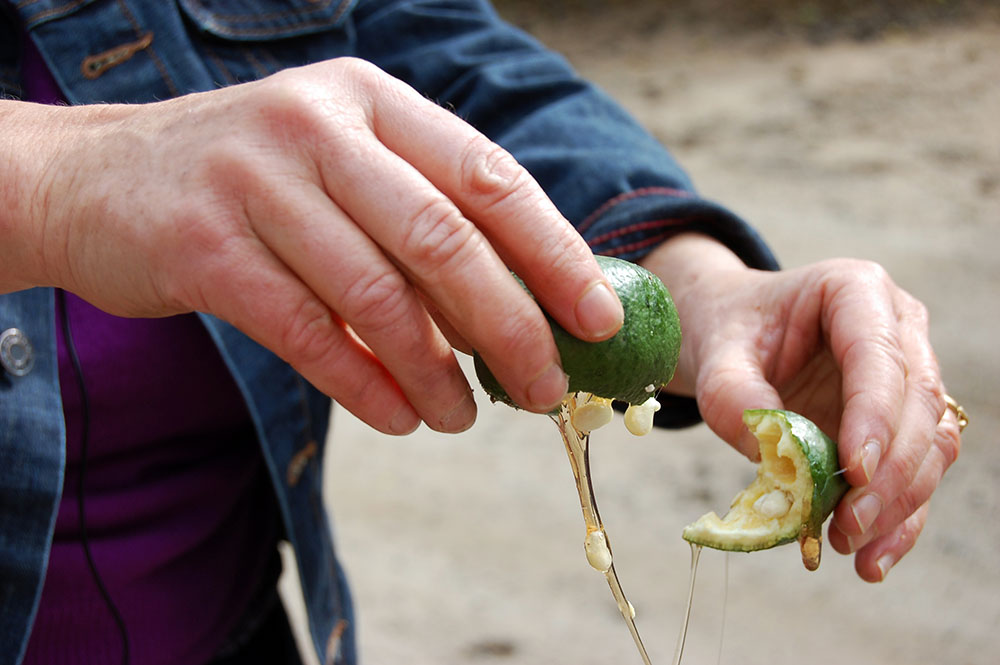
(Credit: Instagram/Paris Museés/Audrey Pirault)
Monday, June 6, 2016
Wednesday, June 1, 2016
In the News: NSF Funding Back on Track
| Fig.1. Research on migration, disease, and agriculture depend on a sound collections infrastructure (Credit left to right: Joi Ito/2008 pic. cropped, Paul Fürst/1656, Marie Hale/2010) |
A critically important source of funding for collections in the United States has been reinstated. Though the program is still under evaluation, this money will go towards the preservation of specimens and infrastructure. This week in the news, we read about this program, as well as research projects underway around the world that depend on collections to further understand human disease, migration, and agriculture.
Thursday, May 26, 2016
Brave New World
Fig.1. Cannabis sativa. (Credit: Biodiversity Heritage Library)
In a laboratory, just outside downtown Portland, Mowgli Holmes and his team at Phylos Bioscience are embarking on a brave new world.
“We’re creating the first genetically defined collection that has ever been,” he said. “... We know less about it than any other crop.”
That crop Holmes is referring to is cannabis, and that collection he and his team of genetic researchers have been working on the past couple of years is an extensive genomic dataset. Holmes and his group will expand upon the "draft" genomics work previously done.
Labels:
agriculture
,
cannabis
,
databases
,
DNA
,
DNA sequencing
,
genome
,
genomics
Monday, May 23, 2016
Monday Morning Coffee Break: May 23
(Credit: Jean Livet and 2007 Olympus BioScapes Digital Imaging Competition®)
Labels:
collection
,
crops
,
emerging diseases
,
human migration
,
living collections
,
Monday
,
Monday morning coffee break
Thursday, May 19, 2016
A Brief History Camels (And Humans)
| Fig.1. Dromedaries in Israel (Credit: Wilson, 2011) |
For the past 3,000 years, single-humped camels, known as dromedaries (Camelus dromedarius), have provided an important source of food and transport to desert communities. The origin of the domesticated dromedary, however, remains relatively unknown. A recent article published in the journal Proceedings of the National Academy of Sciences, reveals some clues as to where and when humans started to depend upon these animals.
Labels:
agriculture
,
ancient DNA
,
climate change
,
DNA
,
environmental change
,
evolution
,
Food Security
,
genetics
Monday, May 16, 2016
Monday Morning Coffee Break: May 16
(Credit: Jean Livet and 2007 Olympus BioScapes Digital Imaging Competition®)
Labels:
art
,
Monday
,
Monday morning coffee break
,
science
,
science art
,
science photos
Wednesday, May 11, 2016
Tale of Two Beaks: Darwin and the 21st Century
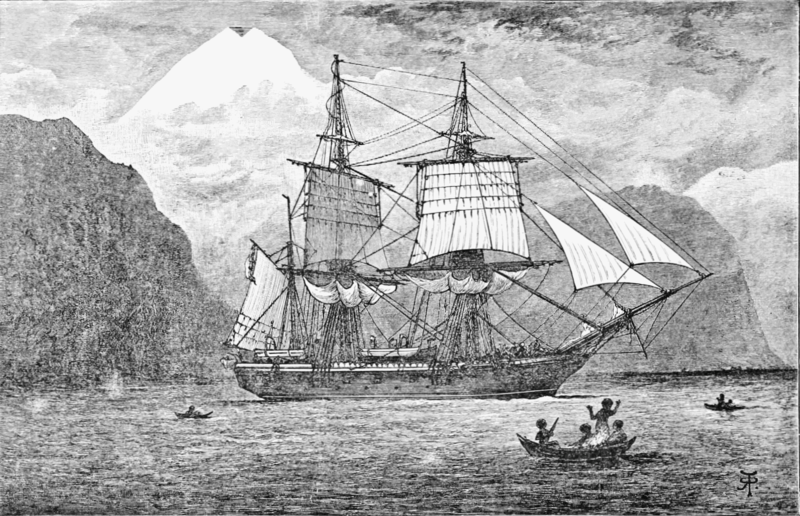
| Fig.1. HMS Beagle in the Strait of Magellan (Credit: R.T. Pritchett, 1900) |
On 11 May 1820, the HMS Beagle was launched from the Woolwich Dockyard on the River Thames. Out of three voyages around the world to survey both land and sea, its second and easily most famous voyage cemented the ship’s role in history, thanks to the efforts of a young passenger named Charles Darwin. Now, nearly 200 years later, scientists have returned to the same birds that came to symbolize Darwin’s work in a study that captures evolution in action.
Subscribe to:
Posts
(
Atom
)