Showing posts with label pollinators. Show all posts

Wednesday, September 7, 2016

Climate change and phenology

Fig.1. David Inouye studies phenology and climate change’s effect on pollinators, such as bees, hummingbirds and flies. (Credit: David Inouye)

When David Inouye looks out the window of his Colorado home, he’s looking at the mountains. He’s traded in the D.C. suburbs for this view, which also happens to be his office.

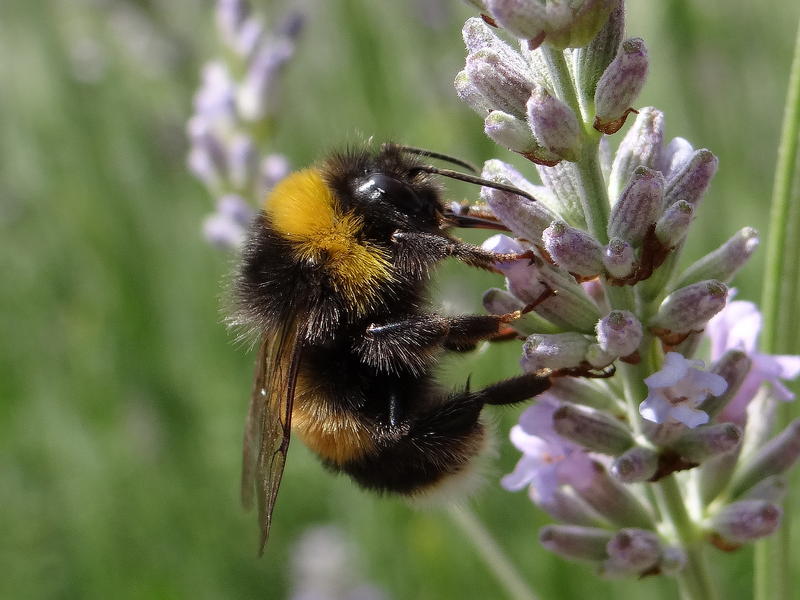
The professor emeritus of the University of Maryland has worked at the Rocky Mountain Biological Laboratory throughout his career, focusing on phenology and climate change’s effect on pollinators. Inouye specifically studies hummingbirds, bumblebees and flies. He has collaborated on other projects studying butterflies and solitary bees. As a graduate student in the 1970s, Inouye began to study how the timing and abundance of flowering of plants changes from day to day, year to year. With 30 plots to study during growing season and gathering data from 120 different species, the study has been ongoing.

Tuesday, July 5, 2016

Save the Date: Food Security Symposium


We are excited to announce the symposium “Stressors and Drivers of Food Security: Evidence from Scientific Collections,” which will bring together researchers and experts on scientific collections across disciplines to address issues regarding food security. This symposium will be held September 19 to 21 at the National Agriculture Library in Beltsville, Md., and will be hosted by the U.S. Department of Agriculture and Scientific Collections International.

Wednesday, February 10, 2016

In the News: From Peru to Outer Space

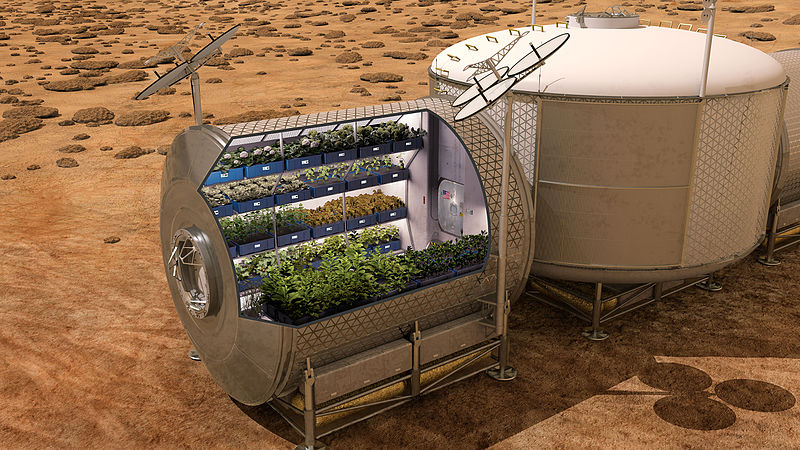
Fig.1. Illustration of a plant growth chamber on Mars (Credit: NASA, 2015)

Scientists from NASA have teamed up with the International Potato Center (CIP) in Peru to grow potatoes in Mars-like conditions for the benefit of possible manned-missions to our neighboring planet. This experiment - perhaps inspired by Mark Watney of The Martian - is just another exciting piece of news in agriculture and food security this month.

From ancient Scandinavia to outer space, collections are pushing the boundaries of our agricultural understanding. They reveal the history of food security and offer a future for agriculture in a world that must feed 7.4 billion people.

Friday, August 14, 2015

In the News: To the Moon and Back


Fig.1. Full Moon photo taken from Madison, Alabama, USA (Credit: Gregory H. Revera, 2010)

These special collections contain over 400,000 bumblebees, around 5,000 marine mammals, 350 varieties of blueberries, and samples that are out of this world. Read about exciting research coming out of museum halls and herbaria for this week’s Follow Friday:

Friday, June 19, 2015

In the News: What's the Buzz?


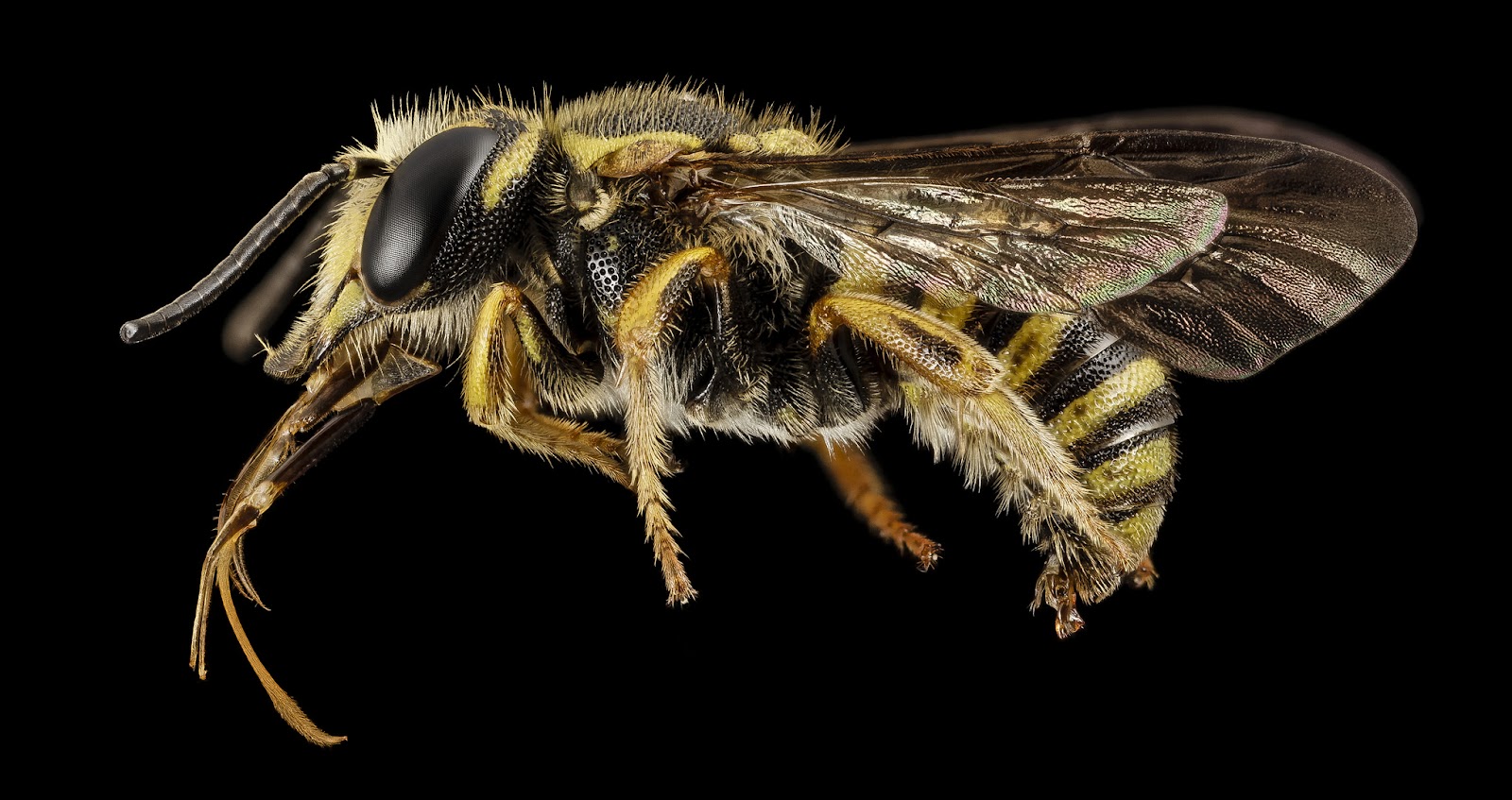
Fig.1. This Paranthidium jugatorium is bee from the eastern United States, whose species is experiencing a population decline. Plant some woodlands sunflowers to attract this beautiful bee! (Credit: USGS via Flickr, 2015)

Happy National Pollinator Week! To accompany our Wednesday post on bats, we found other articles which celebrated pollinators with interesting facts and calls for conservation. Read to learn about these special animals, big and small, that contribute to ecosystems, agriculture, and more:

Wednesday, June 17, 2015

Surviving White-nose: A New Hope


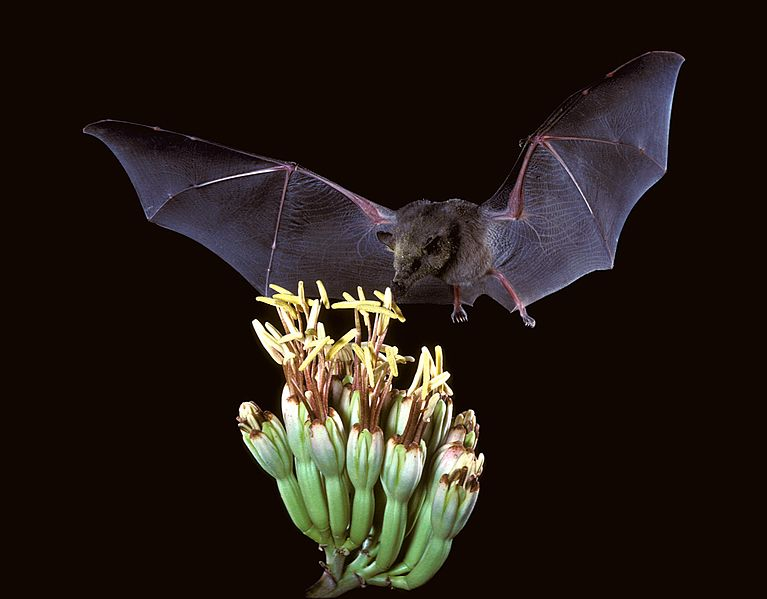
Fig.1. A Mexican long-tongued bat (Choeronycteris mexicana) feeding at a flower. (Credit: USFWS, 2012)

Nearly 80 percent of all flowering plants and three fourths of food crops are reliant on animal pollinators. Well-known pollinators like bees, butterflies, and moths - as well as more unusual ones like lemurs and geckos - are being celebrated right now for National Pollinator Week, an effort promoted by United States agencies and the nonprofit group Pollinator Partnership. This event is an opportunity for researchers and activists to raise awareness about the importance of pollinators to ecosystems and agriculture, as well as to address precipitous declines in some of these animal species. While many people already know about the disappearance of Monarch butterflies and honeybees, the loss of bats is lesser known and yet has been called North America’s “largest wildlife crisis.”

Wednesday, February 4, 2015

Secret Life of Bee Collections


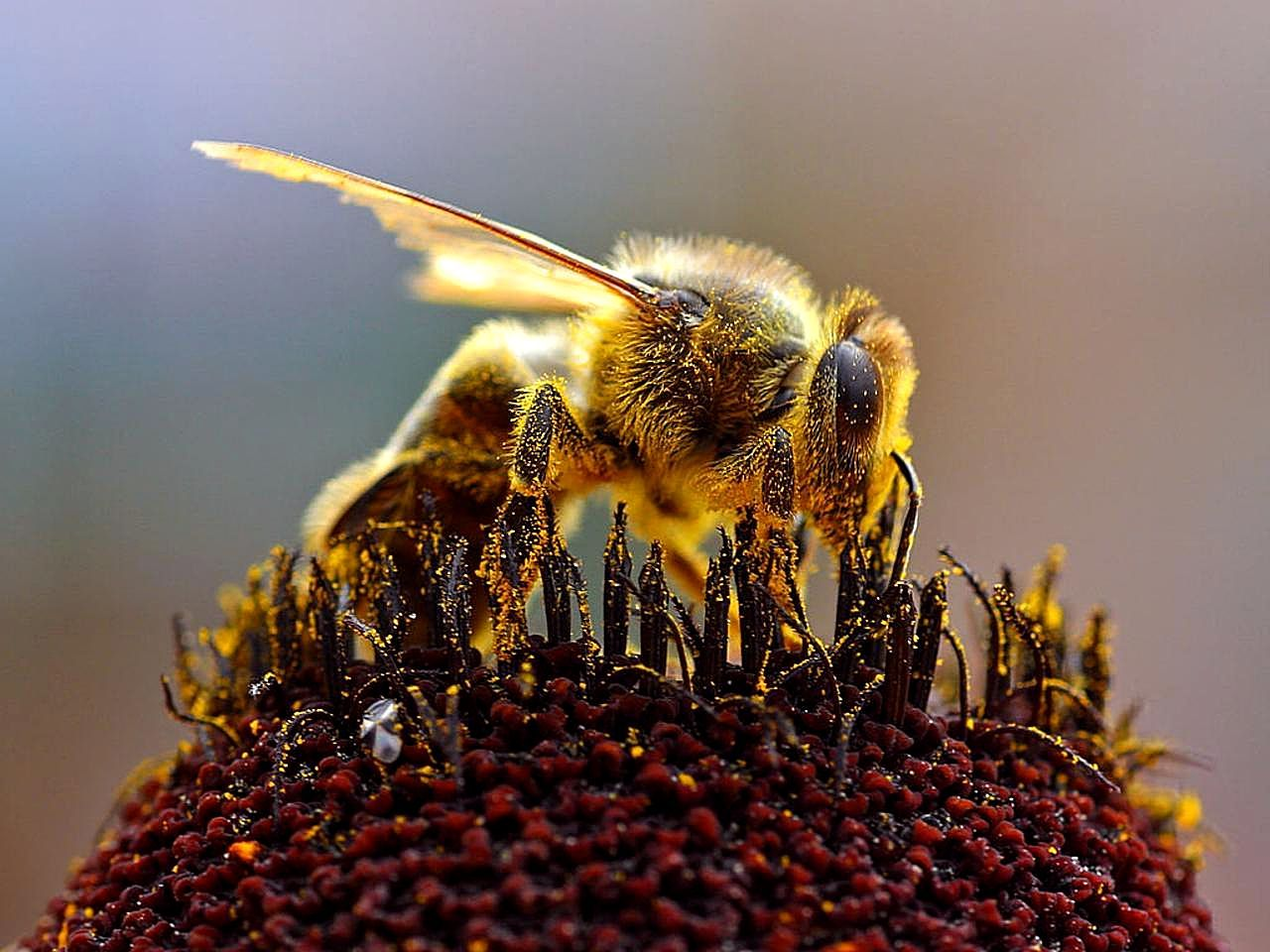
Fig.1. Honey bee (Apis mellifera) collecting pollen (Credit: Jon Sullivan)

Last summer, all 45,000 bumblebees from the National Museum of Natural History’s entomology collections were digitized. This enormous project involved taking pictures of each specimen with their accompanying data and uploading this information into an online database. Collection digitization has become an increasingly popular method for both preserving sample information and offering greater accessibility - in this case, to one of the world’s largest bumblebee collections. With the unfortunate declines in bumblebee and honey bee populations, physical and digital collections offer an opportunity for conservation and research that might otherwise be impossible.