Showing posts with label genebank. Show all posts

Friday, March 25, 2016

Wild Plants and the Future of Crops

Fig.1. Members of CIAT’s Genetic Resources Program in the minus 20℃
gene bank 
(Credit: Neil Palmer/CIAT, 2010)

According to a recent study in the journal Nature Plants, around 95 percent of wild relatives of agricultural crops are insufficiently safeguarded in gene banks around the world. These crop wild relatives (CWR) are closely related to domesticated plants and have become increasingly important in efforts to protect crops against threats like drought, pests, and disease.

Wednesday, December 9, 2015

Bones of Coral Reefs

Fig.1. Coral depends upon algae for survival (Credit:via GIPHY)

In the middle of the Pacific Ocean, just off the small island of Kiritimati, corals are dying off at an astonishing rate. The small atoll, also called Christmas Island, suffers from high water temperatures caused by the current El NiƱo that have reached 4℃ above normal. Although these temperatures might be nice for a beachgoer, they do not bode well for the survival of the atoll’s extensive coral reefs.

Wednesday, October 21, 2015

The woman with the (specimen) solution

Gunter
After nearly three decades with the Centers for Disease Control & Prevention, Elaine Gunter was looking for a change. Since 1978, her role in the central laboratory for the National Health and Nutrition Examination Survey included designing specimen collections for various field studies, managing personnel, and developing assays.

In 2001, she was promoted to a the deputy director position of the Division of Laboratory Sciences at CDC. While working in the management and operations realm, she found she was dealing with the “suits” of Washington, D.C., who were trying to run science agencies as a business.

That’s when she took the leap.

Friday, June 26, 2015

In the News: Tracing History, from Roman Times to Chernobyl


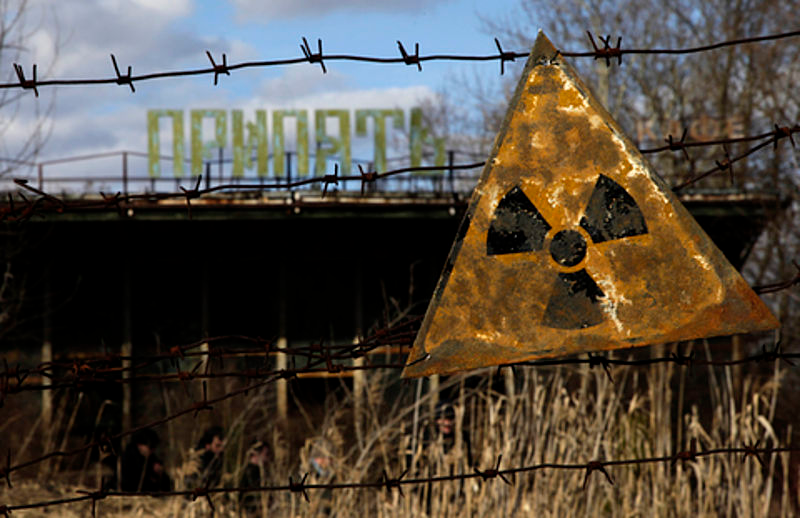
Fig.1. A radiation warning sign hangs on barbed wire outside a cafe in Pripyat, a city forced to evacuate after the Chernobyl disaster (Credit: D. Markosian, 2011)

Repositories can hold an amazing wealth of information, from genomic data on human evolution to environmental records of political change. Learn about these unique collections and the institutions that hold them in this Follow Friday post:

Friday, June 12, 2015

In the News: Collecting for the Future


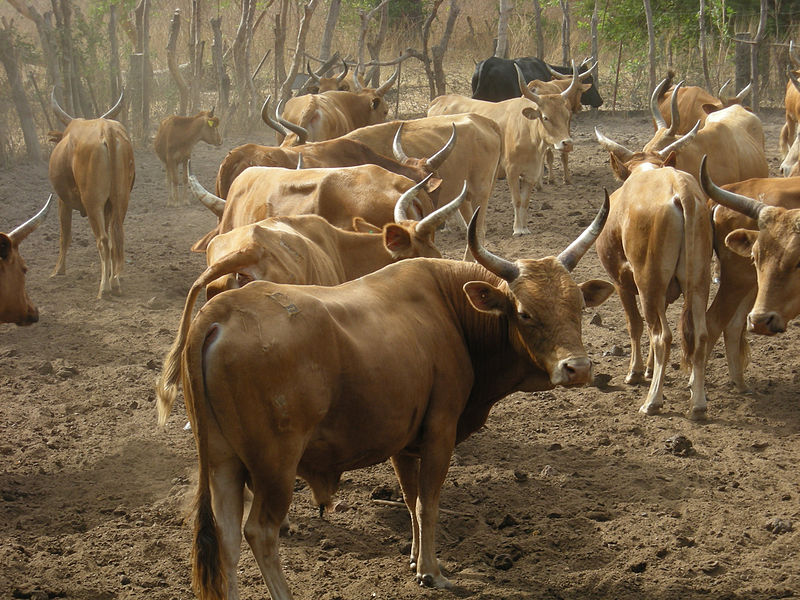
Fig.1. This N’Dama cattle herd in West Africa may hold the answer to livestock diseases which are sweeping across Africa and threatening food security (Credit: ILRI via Wikimedia, 2008)

Museums, herbaria, and genebanks all work to preserve the past so we can prepare for the future. Read about collections-holding institutions that must be protected in order to understand biodiversity, preempt epidemics, study dinosaurs, and more: