Showing posts with label historical records. Show all posts

Wednesday, March 16, 2016

Slavery and the Spread of Disease

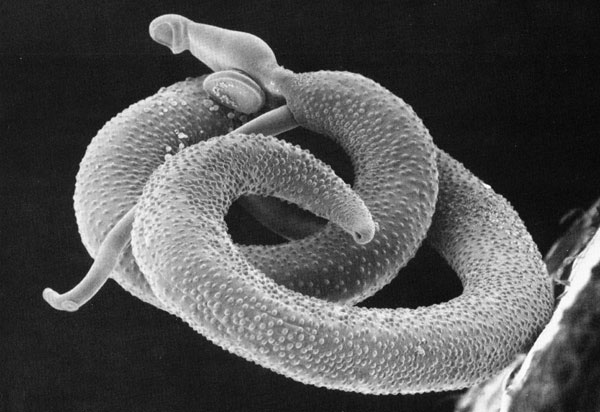
Fig.1. Scanning electron micrograph of a pair of Schistosoma mansoni. 
(Credit: Davies Laboratory Uniformed Services University, Bethesda, MD)

The transatlantic slave trade, which brought millions of Africans to the New World, connected four continents in a massive operation that lasted from the 16th to the 19th centuries. A recent study published in the journal Science Reports revealed that slave traders during these centuries contributed not only to an ongoing and tragic business in human lives, but also helped spread a parasitic disease around the world.

The parasitic fluke Schistosoma mansoni is one of several species that causes schistosomiasis (bilharzia), a Neglected Tropical Disease (NTD) found in almost 240 million people worldwide. This debilitating disease originated in East Africa and currently contributes to 20,000 to 200,000 deaths per year.


Friday, January 15, 2016

In the News: What We Leave Behind

Fig.1. Colosseum in Rome, Italy
(
Credit: David Iliff, 2007. License: CC-BY-SA 3.0)

Although Ötzi the Iceman offers scientists an unprecedented view of early European life, such direct physical evidence is not always available. This week, researchers used parasites to track Romans, mammoth bones to study Arctic dwellers, and more to overturn previously held assumptions about the ancient world.

Tuesday, August 11, 2015

The Edge of Extinction


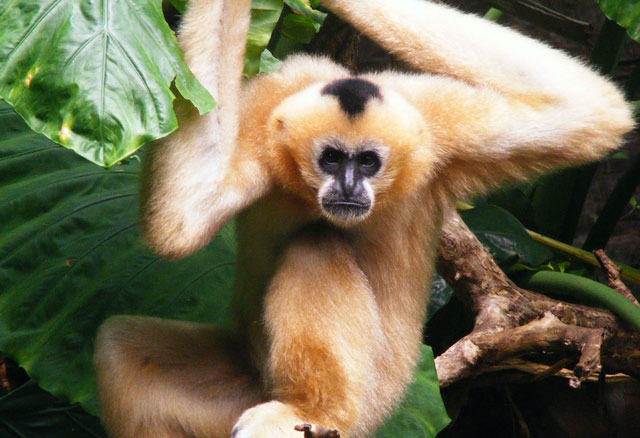
Fig.1. The Hainan black-crested gibbon (Nomascus hainanus) is critically endangered with under 30 individuals left in the wild (Credit: MRNS)

With only 26 to 28 individuals left in the forests of southwest China, Hainan gibbons are the rarest primates on Earth. Habitat destruction and poaching have placed this species (Nomascus hainanus) on the cusp of extinction. Ongoing conservation efforts work to protect China’s endangered biodiversity, but tracking species decline is especially difficult. Extinction often occurs over centuries, and the extent of how humans affect animals is difficult to determine without a baseline of past population numbers. A recent study published in the Proceedings of the Royal Society B examined a novel resource in the fight to protect biodiversity and shed light on the decline of gibbon populations over time.