Showing posts with label sediment cores. Show all posts

Thursday, April 28, 2016

Fossils and our Future Climate

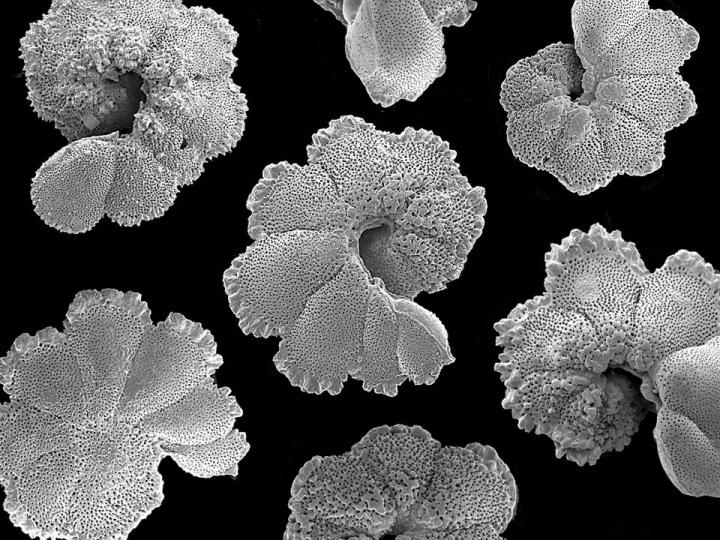
Fig.1. 40 million year old fossil planktonic foraminifera from Tanzania 
(Credit: Paul Pearson/Cardiff University)

According to a study published this week in the journal Nature, tiny fossils from 53 million to 36 million years ago may help to predict the future of climate change. This research, led by scientists from the University of Southampton and partners around the United Kingdom, sheds light on the relationship between atmospheric carbon dioxide (CO2) and climate during an ancient period in Earth’s history known as the Eocene Epoch.


Friday, April 22, 2016

Earth Day 2016: Soil and Sand

Fig.1. Earth Day promotes efforts to protect the planet and the life it holds, from microbes on a plate to huge ecosystems (Credit, left to right, top to bottom: Julia Stevens, Christine Zenino/2009
Laura Cochrane/Mills Park Middle School, Acropara/2011)

On April 22, 1970, a celebration of the first Earth Day kicked off the modern environmental movement. Now, 46 years later, we are dealing with some of the hottest months on record, melting ice sheets, bleaching corals, and more.

However, recent and ongoing research projects offer hope for mitigating climate change challenges. Researchers are using scientific collections - from sediment cores to coral fossils - to understand ancient changes in our planet’s atmosphere and surface. This past year, our blog has highlighted efforts by earth scientists to use lessons from our past to preserve Earth’s future. Read to learn more about these studies and how people around the world are working hard to protect the planet:

Tuesday, December 22, 2015

A Year in the Life of "Collections in the News"

Fig.1. SciColl secretariat is housed at the National Museum of Natural History in D.C.
(Credit: 
Don DeBold, 2012

With 158 articles published and more than a year underway, Collections in the News has sought to raise awareness about ongoing research done with scientific collections. This year brought visitors from 95 countries to our blog who read about a disease detective at the National Museum of Natural History, stopped for their Monday morning coffee break each week, and had the chance to learn how microbes and mammoth bones teach us more about our world.

Some blog highlights for 2015 include article series on international efforts that work to protect the planet’s soils and address climate change problems. We also participated in GIF week with Deep Sea News and celebrated Thanksgiving with maize scientists. Read more below about these article series!

Wednesday, December 16, 2015

The Dawn of Birds

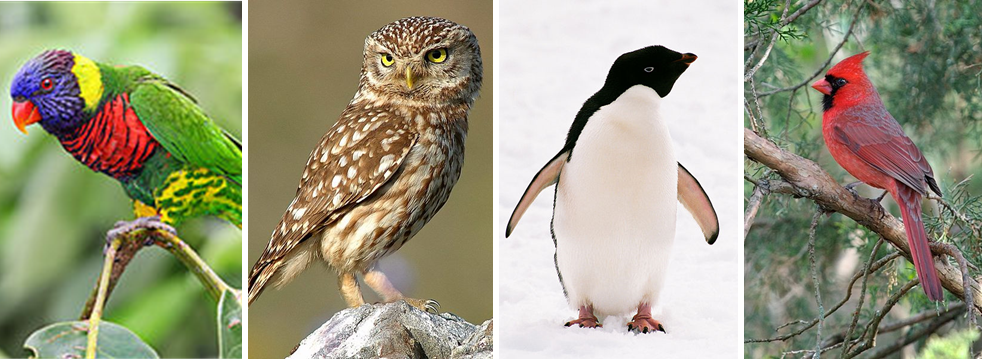
Fig.1. A green-naped lorikeet, a little owl, an Adélie penguin, and a northern cardinal show only a fraction of the remarkable diversity of birds (Credit: Benjamint, 2009Trebol-a, 2011Reinhard Jahn, 2007; & Stephen Wolfe, 2011)

Around 65 million years ago, one of the largest mass extinction events in Earth’s history occurred. An estimated 75 percent of all species went extinct, from non-avian dinosaurs to types of mollusks, plankton, insects, and plants. With extinction, however, came the chance for animals like birds to diversify and expand into empty ecological niches in a process called adaptive radiation. Although the Cretaceous-Paleogene extinction event (K-Pg) may have enabled the rapid evolution of new species of birds, research published last Friday in the journal Science Advances suggests that birds have a much longer and more complicated history than previously thought.

Friday, December 4, 2015

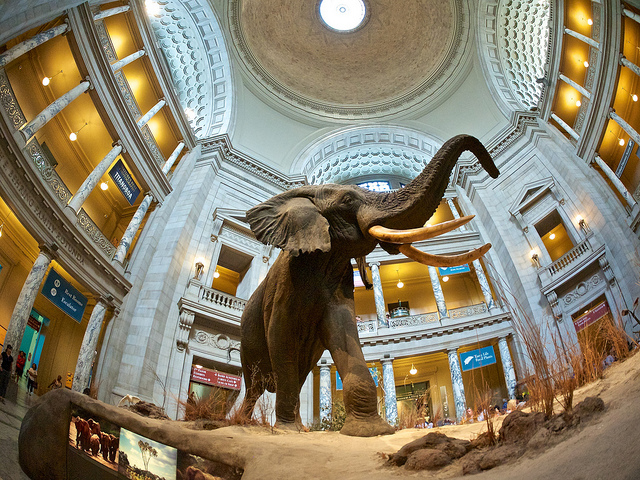
In the News: Mammoths and Men

Fig.1. Mammoth skeleton at the George C. Page Museum
(Credit: Russ via Flickr, 2014)

Artifacts, sediment cores, and mammoth bones all connect us to ancient history, either through culture or the natural world. This week in the news, we read about how to examine the past using old collections in new ways:

Thursday, December 3, 2015

Of Ice and Insects

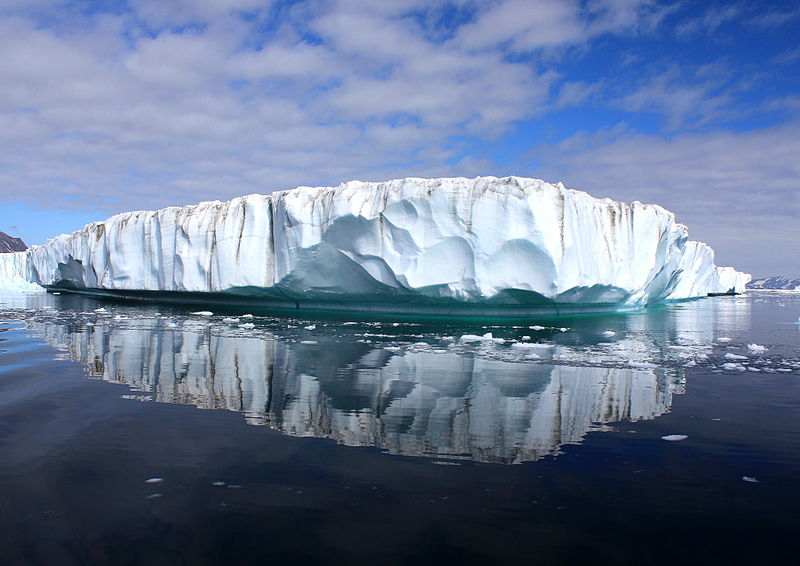
Fig.1. Greenland Ice Sheet (Credit: Christine Zenino, 2009)

Researchers at Stockholm University, Plymouth University, and the Natural History Museum, London (NHM) may have solved one of the most enduring puzzles from the last Ice Age. Around 12,880 years ago, the Northern Hemisphere experienced a sharp change in temperatures that culminated in a decrease of about 5℃ over 400 years. This event, called the Younger Dryas, is well documented in environmental records, but the cause had been largely unknown. In a study recently published in the journal Nature Communications, the researchers brought together three types of collections to address this mystery.

Tuesday, August 25, 2015

Ancient Giants in Warmer Times


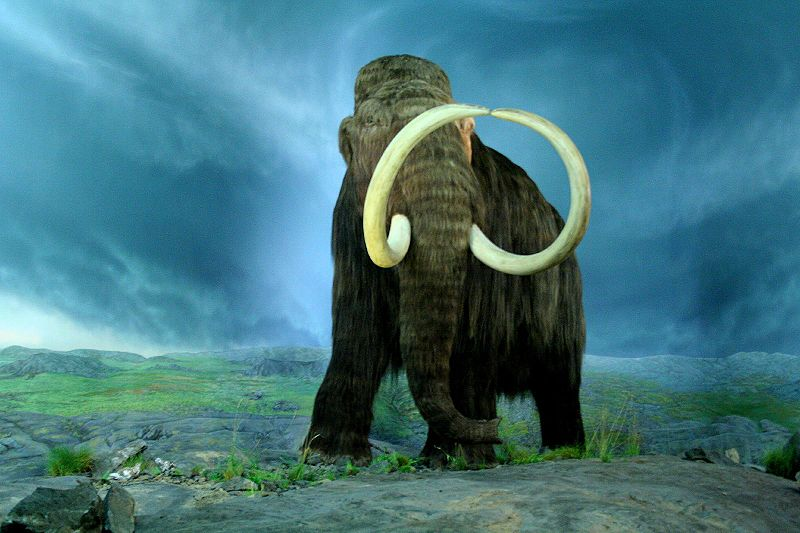
Fig.1. Woolly Mammoth at the Royal BC Museum, Victoria, British Columbia (Credit: Tracy O via Flickr)

Between 40,000 to 10,000 years ago, the world experienced a mass extinction of megafauna, a diverse group of animals that included such members as the mastodon and the woolly rhino. Although humans are often blamed for the disappearance of these creatures - either through overkill or habitat modification - the underlying causes are more complicated than previously thought

Friday, July 31, 2015

In the News: Melting Mummies and Sinking Cities


Fig.1. Washington, D.C. is slowly sinking due to a geological process that started around 20,000 years ago (Credit: Architect of the Capitol)

Between fungi that accompanies natural disasters and the melting field of glacial archaeology, this week featured new weird and wonderful research. Read to learn more about old ingredients for new beer, unconsidered repercussions of climate change, a slowly sinking city, and more:

Wednesday, July 29, 2015

The Fall of a Civilization

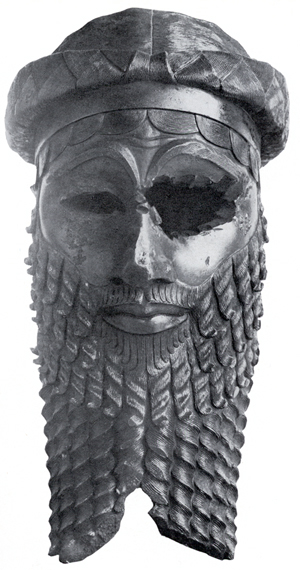
Fig.1. Bronze head of a king, most likely Sargon of Akkad. 

Around 4,300 years ago, Sargon of Akkad ruled what was considered to be the world’s first empire. The prosperity of the Akkadian Empire, which relied on the fertile soils between the Tigris and Euphrates rivers, collapsed abruptly almost 200 years later. Scientists now hypothesize that Sargon’s empire fell to a dramatic shift in the climate, which dried up Akkadian's rain-dependent agricultural systems. A recent study published in the journal Quaternary Science argues that this Mesopotamian empire was only one of several ancient civilizations affected by sudden climate variability.

Wednesday, July 8, 2015

Rulers of the Sea

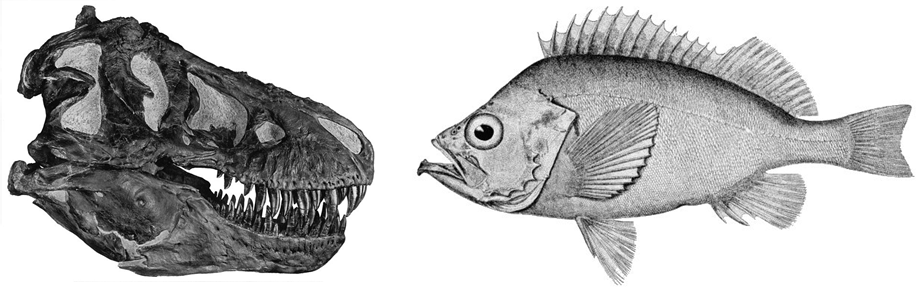
Fig.1. The T. rex died out 66 million years ago, along with other non-avian dinosaurs, leaving ray-finned fishes to dominate in the waters (Credit: A.E. Anderson, AMNH 5027 [left] and Magnus Manske, 2004 [right])

Even though we were excited to see a Tyrannosaurus rex in “Jurassic World,” it is probably best that they stayed in the Cretaceous. Humans and dinosaurs certainly do not mix, but ancient mammals lived side-by-side with the T. rex. That is, until the asteroid killed off all non-avian dinosaurs in the Cretaceous-Paleogene [K/Pg] extinction event, leaving an ecological void for mammals to evolve and ultimately dominate in terrestrial ecosystems. A recent study published in PNAS by paleobiologists at UC San Diego suggests a similar story unfolded with the evolution of fish in the oceans.

Friday, June 26, 2015

In the News: Tracing History, from Roman Times to Chernobyl


Fig.1. A radiation warning sign hangs on barbed wire outside a cafe in Pripyat, a city forced to evacuate after the Chernobyl disaster (Credit: D. Markosian, 2011)

Repositories can hold an amazing wealth of information, from genomic data on human evolution to environmental records of political change. Learn about these unique collections and the institutions that hold them in this Follow Friday post:

Friday, May 15, 2015

In the News: A Change in (Ancient) Tides


Fig.1. This adult deer tick and other members of its species are spreading into new areas in North America, thanks to climate change. The spread is a particular concern for public health because deer ticks are vectors for Lyme disease (Credit: Scott Bauer, USDA)

Ancient changes in the environment and modern disease response to climate change are the topics for this week’s #FollowFriday. Read about avian flu in the United States, the rise of Panama, the fall of a civilization, and more:

Thursday, March 12, 2015

Wheat in an Ancient World

Editor's Note

An analysis published in the journal eLIFE in November questioned the authenticity of the 8,000 year-old wheat DNA found in the British Isles, cited below. This criticism could overturn the results of Allabay et al.'s study. Alternatively, Allaby et al.'s conclusions, if verified, could drastically change our understanding of the spread of agriculture to the British Isles. This critical review of results is a normal part of the scientific process, so we encourage you to keep up-to-date on the situation and draw your own conclusions. 


Fig.1. Domesticated einkorn wheat (Triticum monococcum subsp. monococcum), like these plants in Turkey, may have arrived in the British Isles 2,000 years earlier than expected. (Credit; Mark Nesbitt, 2006)

The application of scientific collections is not just limited to natural or physical sciences. With the advent of newer technologies, the field of archaeology has been able to support material evidence with precise chemical, dating, and DNA analyses. Sediment cores - which can date back to 55 million years ago - are particularly useful for understanding a prehistoric settlement. As materials fall to the ocean floor, they stack on top of past sediments and ultimately form a chronology of the life and environment of that location.