(Credit: Joachim Burger/JGU Mainz)
Showing posts with label agriculture. Show all posts
Monday, August 8, 2016
Monday, July 11, 2016
Monday Morning Coffee Break: July 11
Labels:
agriculture
,
agroecology
,
Food Security
,
Monday morning coffee break
Thursday, July 7, 2016
The Greatest Hits
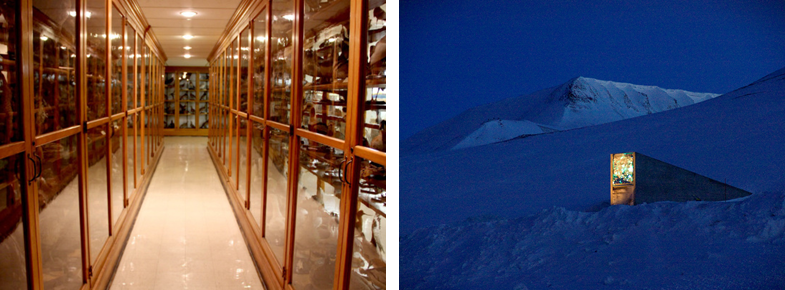
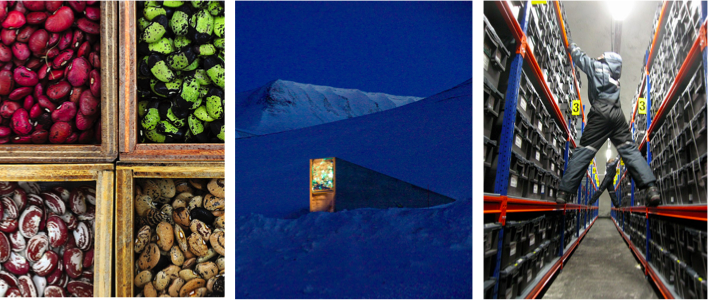
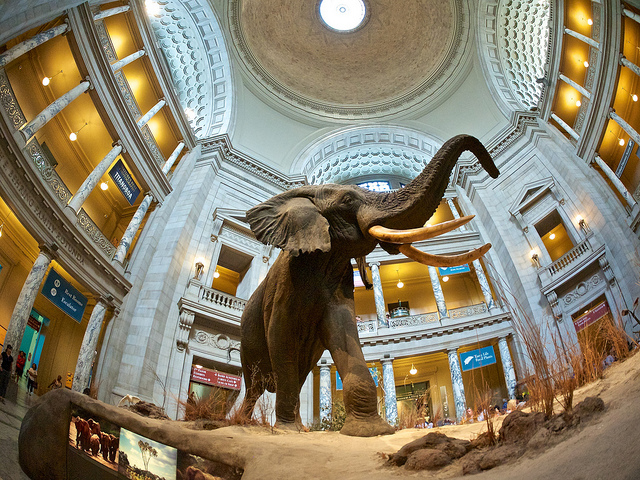
| Fig.1. Museum in Pennsylvania (Credit: Michelle J. Enemark, 2011) and the Svalbard Global Seed Vault (Credit: Mari Tefre, Global Crop Diversity Trust, via Flickr) |
Editor’s Note: After two years of exciting and engaging work, staff writer Adele Crane will be leaving Scientific Collections International for graduate school in Arizona. Out of 214 posts garnering more than 34,500 views, Adele chose some of her favorite articles.
From a small natural history museum in Pennsylvania to a seed-bank built to survive doomsday scenarios, collections reside all around the world in many forms. My work over the past two years with Scientific Collections International (SciColl) has been to chip away at only a fraction of the specimens and samples out there, exploring a slew of topics from microbes in your backyard to moon rocks - and on rare cases, even both!
When we initially started the blog, we wanted to connect collections to disease research and response. Articles on cross-disciplinary and novel approaches to outbreaks would lead up to SciColl’s very first workshop on Emerging Infectious Diseases. The workshop was indeed timely, coinciding with the Ebola epidemic in Africa, and it highlighted the need to make this type of active outreach ongoing, instead of sporadic.
Perhaps as a preface to the type of work I will pursue in graduate school, my favorite articles were a fantastic education on how to bridge unique specimens with historic and current disease research. To break down the broad topic of “emerging infectious diseases,” we focused on smaller case studies of known and relatively unknown pathogens that affect millions around the world:
- Disease Collections and How They Can Save the World: In 1976, a broken vial of blood transported in luggage from the Democratic Republic of the Congo found its way to the young Belgian scientist, Peter Piot. The blood carried one of the most feared pathogens in current disease research.
- C. Miguel Pinto, the Disease Detective: A conversation with C. Miguel Pinto in our very own museum explored the cross-section of disease research and classic taxonomy, in which basic evolutionary principles are tested.
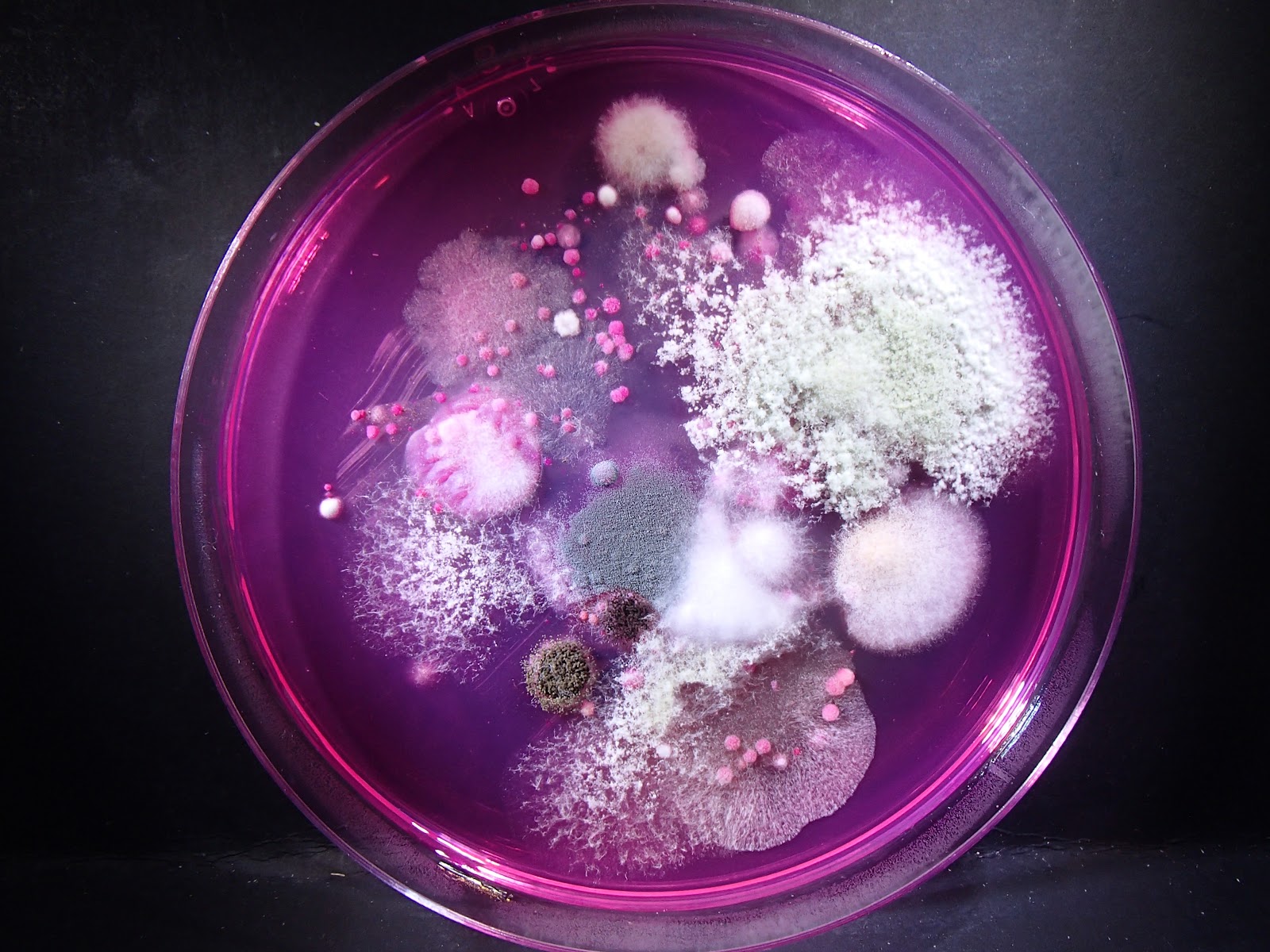
| Fig.2. Plate of microorganisms that were cultured from the soil (Credit: Julia Stevens) |
Over the course of the blog, we looked beyond case studies and current research challenges. How can ancient specimens inform future problems? There are many examples where collections were used to further important research in areas like environmental change and food security.
When we take a step back, the larger impacts of educating the next generation of scientists or bringing countries together to protect biodiversity are extraordinarily important. After working with SciColl, I am grateful to have gained that perspective and I hope to hear many more of these stories in years to come:
- Microbes and Middle Schools: Citizen science has the ability to reach both students and researchers in powerful ways. Collections that not only support invasive species studies but engage middle schoolers in science are a cornerstone of ongoing work at the North Carolina Museum of Natural Sciences.
- Seeds for the End of the World: Seed banks preserve both biological diversity and cultural heritage. Banks around the world, from Peru to Norway, are working to provide a future for agriculture and historical practices.
- Smart Collecting: A New Collecting Culture: What began as a short discussion in our Emerging Infectious Disease workshop turned into a larger conversation about a “collecting culture” that could be improved for museums and biobanks alike.
Labels:
agriculture
,
bacteria
,
biobank
,
biodiversity
,
emerging diseases
,
emerging infectious diseases
,
interdisciplinary
,
NMNH
,
SCAN
,
SciColl
,
scientific collections
,
Smithsonian
Tuesday, July 5, 2016
Save the Date: Food Security Symposium
We are excited to announce the symposium “Stressors and Drivers of Food Security: Evidence from Scientific Collections,” which will bring together researchers and experts on scientific collections across disciplines to address issues regarding food security. This symposium will be held September 19 to 21 at the National Agriculture Library in Beltsville, Md., and will be hosted by the U.S. Department of Agriculture and Scientific Collections International.
Labels:
agriculture
,
agroecology
,
biodiversity
,
Food Security
,
pollinators
,
SciColl
,
scientific collections
,
Smithsonian
,
USDA
Wednesday, June 1, 2016
In the News: NSF Funding Back on Track
| Fig.1. Research on migration, disease, and agriculture depend on a sound collections infrastructure (Credit left to right: Joi Ito/2008 pic. cropped, Paul Fürst/1656, Marie Hale/2010) |
A critically important source of funding for collections in the United States has been reinstated. Though the program is still under evaluation, this money will go towards the preservation of specimens and infrastructure. This week in the news, we read about this program, as well as research projects underway around the world that depend on collections to further understand human disease, migration, and agriculture.
Thursday, May 26, 2016
Brave New World
Fig.1. Cannabis sativa. (Credit: Biodiversity Heritage Library)
In a laboratory, just outside downtown Portland, Mowgli Holmes and his team at Phylos Bioscience are embarking on a brave new world.
“We’re creating the first genetically defined collection that has ever been,” he said. “... We know less about it than any other crop.”
That crop Holmes is referring to is cannabis, and that collection he and his team of genetic researchers have been working on the past couple of years is an extensive genomic dataset. Holmes and his group will expand upon the "draft" genomics work previously done.
Labels:
agriculture
,
cannabis
,
databases
,
DNA
,
DNA sequencing
,
genome
,
genomics
Thursday, May 19, 2016
A Brief History Camels (And Humans)
| Fig.1. Dromedaries in Israel (Credit: Wilson, 2011) |
For the past 3,000 years, single-humped camels, known as dromedaries (Camelus dromedarius), have provided an important source of food and transport to desert communities. The origin of the domesticated dromedary, however, remains relatively unknown. A recent article published in the journal Proceedings of the National Academy of Sciences, reveals some clues as to where and when humans started to depend upon these animals.
Labels:
agriculture
,
ancient DNA
,
climate change
,
DNA
,
environmental change
,
evolution
,
Food Security
,
genetics
Thursday, April 14, 2016
Seeds of Scientific Progress
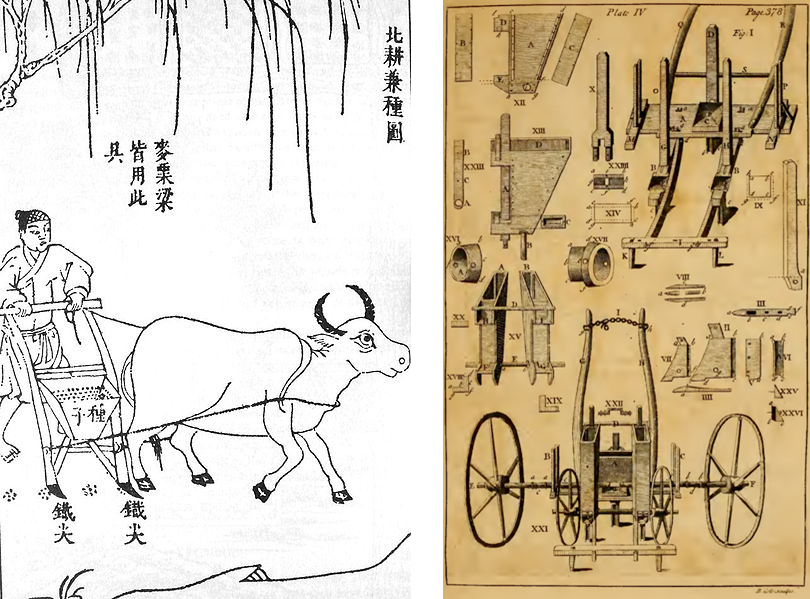
| Fig.1. This Chinese seed drill (left) and Jethro Tull’s Seed Drill (right) were both drawn by animals (Credit: Chinese Seed Drill, Tien Kung Kai Wu/1637, Tull Seed Drill, Jethro Tull/1731) |
Editor’s Note: Our Food Security Symposium has been postponed until September 2016. Please email us at scicoll@si.edu with any questions or join our mailing-list for routine updates on the new symposium.
Around 1800, the world's population reached one billion people. In less than 50 years from today, that number is projected to reach 9.7 billion people. Although this rapid increase in population size can largely be attributed to health, sanitation, and farming innovations in the 20th century, it has roots in the Industrial Revolution.
Labels:
agriculture
,
Food Security
,
technology
Thursday, April 7, 2016
Millet and the Agricultural Revolution
| Fig.1. Professor Martin Jones with millet in north China (Credit: Martin Jones) |
Editor’s Note: Our Food Security Symposium has been postponed until September 2016. Please email us at scicoll@si.edu with any questions or join our mailing-list for routine updates on the new symposium.
Millet’s Long History
Recent research suggests that common millet (Panicum miliaceum) - often used as birdseed today - may have bridged the gap between nomadic hunter-gatherer cultures and agrarian societies in Neolithic Eurasia, holding possible lessons for current food security challenges.Friday, March 25, 2016
Wild Plants and the Future of Crops
| Fig.1. Members of CIAT’s Genetic Resources Program in the minus 20℃ gene bank (Credit: Neil Palmer/CIAT, 2010) |
According to a recent study in the journal Nature Plants, around 95 percent of wild relatives of agricultural crops are insufficiently safeguarded in gene banks around the world. These crop wild relatives (CWR) are closely related to domesticated plants and have become increasingly important in efforts to protect crops against threats like drought, pests, and disease.
Labels:
agriculture
,
crop wild relatives
,
Food Security
,
genebank
,
scicollfood
,
seed banks
Monday, March 7, 2016
Monday Morning Coffee Break: March 7
(Credit: Simon Dawson/Bloomberg)
Labels:
agriculture
,
climate
,
climate change
,
coffee
,
environmental change
,
Food Security
,
Monday
,
Monday morning coffee break
Thursday, February 18, 2016
The Botanist and the Digital Age
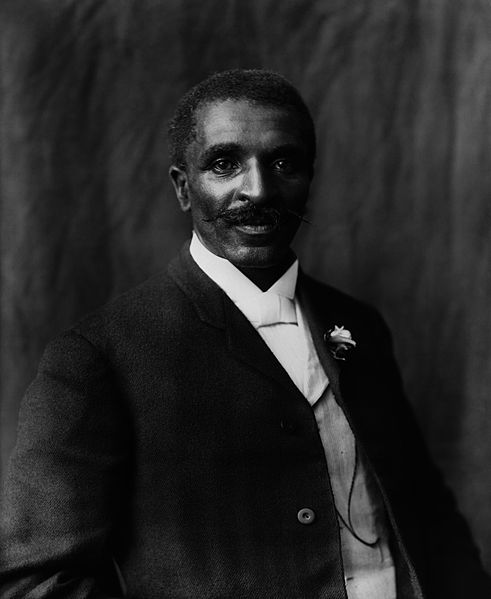
| Fig.1. George Washington Carver (Credit: Frances Benjamin Johnston, 1906) |
Last week, 25 specimens of fungi collected by the famed botanist and inventor George Washington Carver were discovered in the Wisconsin State Herbarium at the University of Wisconsin-Madison. Born into slavery around 1864, Carver became one of the most prominent African-American scientists and is now well known for his research with peanuts, sweet potatoes, and soybeans.
Thursday, February 4, 2016
Ice Cores and the Ancient Man
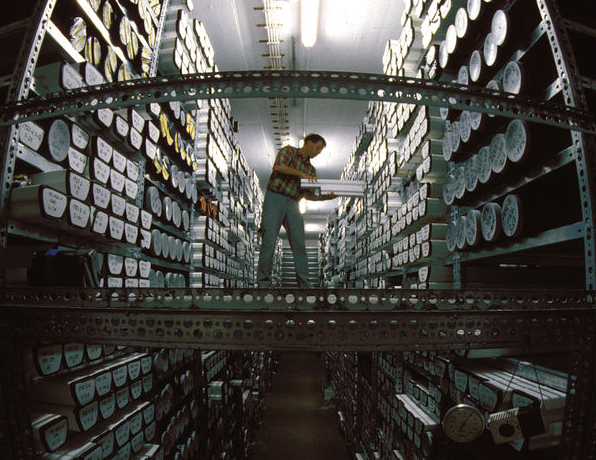
| Fig.1. AWI Core Repository (Credit: Hannes Grobe/AWI, CC-BY-SA-2.5) |
In 2003, paleoclimatologist William Ruddiman at the University of Virginia hypothesized that early humans significantly altered the climate by burning large areas of forests to clear land for farming and grazing. The greenhouse gases released into the atmosphere - mainly carbon dioxide and methane - halted a natural cooling cycle and possibly prevented another ice age.
Friday, January 29, 2016
In the News: The Blue Rose
| Fig.1. The Suntry "blue" rose is at the center of a shift in plant engineering (Credit: BlueRoseMan, 2011) |
From laser technology to DNA barcoding, the modern study of plants involves increasingly unique approaches to examining preserved specimens. This week in the news, we remember the history of herbaria, grow miniature vegetables, and start a home-grown plant engineering movement that seeks to shake up genetics!
Labels:
agriculture
,
archaeology
,
Follow Friday
,
herbarium
,
tree rings
Friday, January 22, 2016
In the News: Microbes and the Moon
| Fig.1. Comet Lovejoy visible near Earth’s horizon (Credit: NASA/Dan Burbank, 2011) |
From microscopic organisms to lunar rocks, these collections offer a rare view of our solar system. In the news this week are visits with curators who collect comet dust, find new species, protect banana crops, and more!
Labels:
agriculture
,
climate change
,
environmental change
,
Follow Friday
,
microbiology
,
moon
Tuesday, December 29, 2015
A Year in the Life of Scientific Collections
| Fig.1. Scenes from the Svalbard Global Seed Vault (Credit left to right: Neil Palmer/CIAT, 2011; Mari Tefre/Global Crop Diversity Trust, 2008; Dag Terje Filip Endresen/Svalbard Global Seed Vault, 2008) |
Earlier this year, the International Center for Agricultural Research in the Dry Areas (ICARDA) made a request to withdraw seeds from the Svalbard Global Seed Vault, which holds more than 850,000 samples from every country in the world. This request is the first of its kind for the “Doomsday Vault” that holds duplicate seed samples for national and international gene banks. The Syrian civil war forced ICARDA to move its headquarters from Aleppo, Syria, to Beirut, Lebanon, in 2012, and researchers managed to save 80 percent of the seed samples by sending them into storage at Svalbard.
Although such a withdrawal will allow ICARDA to regenerate these precious samples, it reveals the vulnerability of collections to war or even natural disasters. The year of 2015 marked a specific effort by individuals and organizations around the world to protect and sustain scientific collections, from those housed in natural history museums to frozen specimens in gene banks. We identified major trends that have affected both how collections are viewed in science and policy, as well as how they can be protected for generations to come. Read to learn more about what happened in the collections world this year, and what you should watch out for in 2016.
Labels:
agriculture
,
AMNH
,
Anthropocene
,
climate change
,
Field Museum
,
genomics
,
GIFs
,
SciColl
,
scientific collections
,
seed banks
,
Smithsonian
,
Svalbard
Tuesday, December 22, 2015
A Year in the Life of "Collections in the News"
| Fig.1. SciColl secretariat is housed at the National Museum of Natural History in D.C. (Credit: Don DeBold, 2012) |
With 158 articles published and more than a year underway, Collections in the News has sought to raise awareness about ongoing research done with scientific collections. This year brought visitors from 95 countries to our blog who read about a disease detective at the National Museum of Natural History, stopped for their Monday morning coffee break each week, and had the chance to learn how microbes and mammoth bones teach us more about our world.
Some blog highlights for 2015 include article series on international efforts that work to protect the planet’s soils and address climate change problems. We also participated in GIF week with Deep Sea News and celebrated Thanksgiving with maize scientists. Read more below about these article series!
Labels:
agriculture
,
ancient DNA
,
archaeology
,
citizen science
,
climate change
,
CO2
,
coffee
,
IYS
,
microbiology
,
oceans
,
permafrost
,
sediment cores
,
soil samples
,
teosinte
Friday, November 27, 2015
In the News: Return to the Wild Crops
| Fig.1. Wild turkeys in Oklahoma (Credit: Larry Smith via Flickr, 2015) |
For this Thanksgiving, researchers are turning to wild animal and crop relatives to improve biodiversity. From smartphones to frozen seeds, read more about how new technology will preserve agriculture in a warming world:
Tuesday, November 24, 2015
Be Thankful for Pumpkins
| (Credit: Ginny via Flickr, 2008) |
As families around the United States begin their Thanksgiving feast, they should be particularly grateful for the pumpkin. According to a study published last week in the journal Proceedings of the National Academy of Science, this beloved squash survived extinction only through domestication by humans thousands of years ago.
Labels:
agriculture
,
archaeology
,
domestication
,
Food Security
,
megafauna
Wednesday, October 14, 2015
Ancient DNA and a History of Human Migration
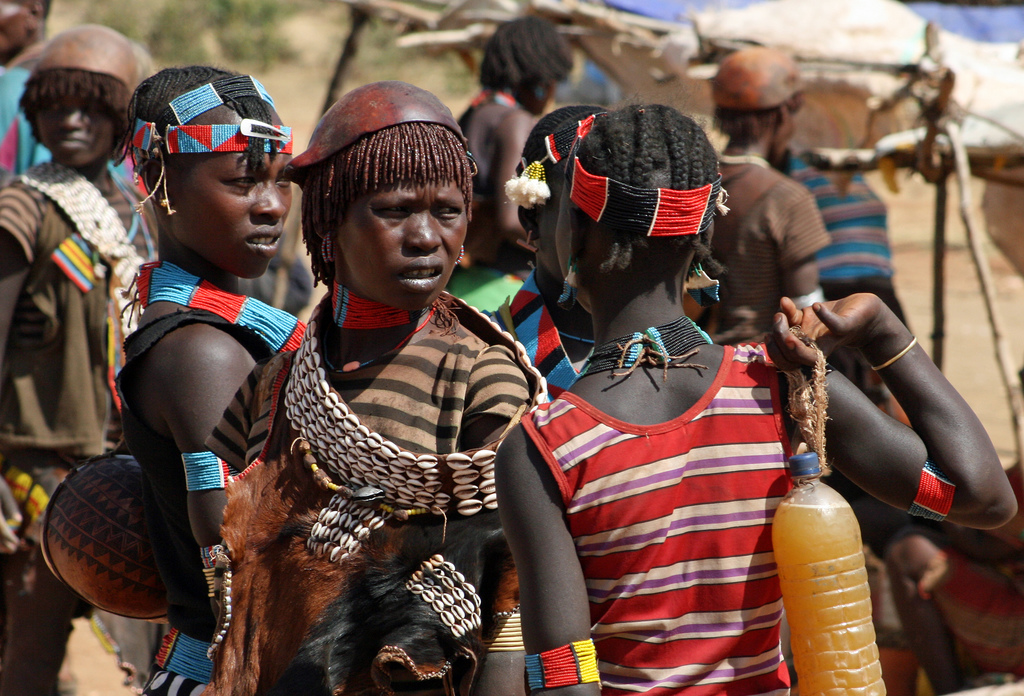
| Fig.1. Members of the Ari tribe in modern southwest Ethiopia are probably direct descendants of the Mota man (Credit: Carsten ten Brink via Flickr) |
Around 60,000 to 100,000 years ago, modern humans migrated out of Africa and proceeded to populate every corner of the world. Although ancient DNA analyses have added complexity to the routes of human migration, from Neolithic farmers to early hunter-gatherers in Europe, the birthplace of humanity has remained elusive. Among other challenges, regional hot temperatures that quickly degrade genetic material barred ancient African remains from such studies. However, in research published last week in the journal Science, a skeleton found in a remote cave in Ethiopia produced Africa’s first ancient human genome.
Subscribe to:
Posts
(
Atom
)