Showing posts with label human migration. Show all posts

Tuesday, October 31, 2017

Grandma, what a big brain you have!

All the better to survive with, my dear


Used with permission from Nicola L. Robinson.

Editor’s Note: SciColl held our first community workshop on Emerging Infectious Diseases in October 2014. This October we're posting several pieces that highlight the important work where collections continue to play an integral role.

Editor’s Note: SciColl intern, Ebubechi Okpalugo from Pembroke College, contributed this article as part of her time in the SciColl office during Summer 2017.

Sit down with a prehistoric relative of ours from the genus Homo - their extinction making it a lot easier said than done - and you’ll notice something significantly different: their heads, and therefore brains, are a fraction of the size of a modern human’s. Why exactly did brain size increase? Quite simply, large and complex brains can process and store more information, which was hugely beneficial to humans as they developed skills and social interaction.

The Smithsonian NMNH Human Origins exhibit houses a collection of fossil skull remnants dating back as far as 3 million years ago, as well as silicon reconstructions of early humans. One can see a gradual change in facial features, body hair and most significantly, head shape and size. Over the course of human evolution, it’s found that brain size tripled, with the modern human brain being the largest and most complex of any living primate. But, size alone doesn't tell us much about thinking ability.

Here’s a bit of what we know. 
Wednesday, June 1, 2016

In the News: NSF Funding Back on Track

Fig.1. Research on migration, disease, and agriculture depend on a sound collections infrastructure
 (Credit left to right: Joi Ito/2008 pic. cropped, Paul Fürst/1656, Marie Hale/2010)

A critically important source of funding for collections in the United States has been reinstated. Though the program is still under evaluation, this money will go towards the preservation of specimens and infrastructure. This week in the news, we read about this program, as well as research projects underway around the world that depend on collections to further understand human disease, migration, and agriculture.

Thursday, April 7, 2016

Millet and the Agricultural Revolution

Fig.1. Professor Martin Jones with millet in north China
(
Credit: Martin Jones)

Editor’s Note: Our Food Security Symposium has been postponed until September 2016. Please email us at scicoll@si.edu with any questions or join our mailing-list for routine updates on the new symposium. 


Millet’s Long History

Recent research suggests that common millet (Panicum miliaceum) - often used as birdseed today - may have bridged the gap between nomadic hunter-gatherer cultures and agrarian societies in Neolithic Eurasia, holding possible lessons for current food security challenges.

Friday, February 5, 2016

In the News: Mammoth for Dinner?

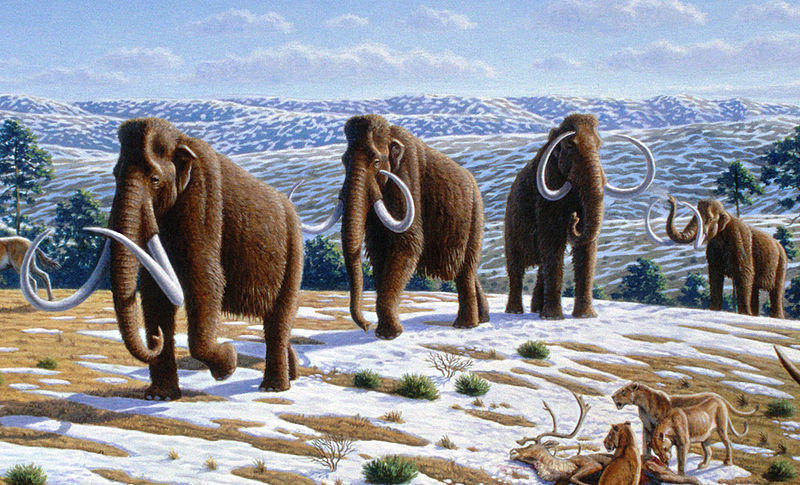
Fig.1. Woolly mammoths (Mammuthus primigenius) in late Pleistocene landscape
(
Credit: Mauricio Antón, 2004)

From ices cores to mammoth meat, this week is full of curiosities frozen in time. A return to these specimens reveals an important software error, a lesson in evolution, an answer to a decades-old question, and more:

Wednesday, January 13, 2016

The Iceman's Stomach Bug

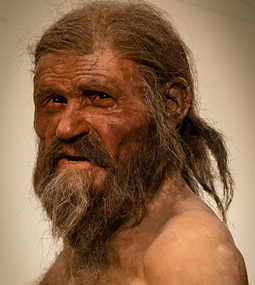
Fig.1. Reconstruction of Ötzi
(
Credit: Thilo Parg/Wikimedia Commons, License: CC BY-SA 3.0)

In 1991, two hikers stumbled upon a mummy high in the Ötztal Alps, right on the border between Austria and Italy. This mummy - nicknamed Ötzi, or the Iceman - is Europe’s oldest natural human mummy and is arguably one of the most studied cadavers in science. From his eye color (brown) to his dental health (poor), Ötzi reveals an amazing amount about how Europeans looked and lived 5,300 years ago. An international group of scientists released a study last week in the journal Science that added yet another detail to the treasure trove of research on the corpse, which may inform our understanding of ancient human migration into Europe.

Wednesday, November 18, 2015

The Mystery of European Ancestry

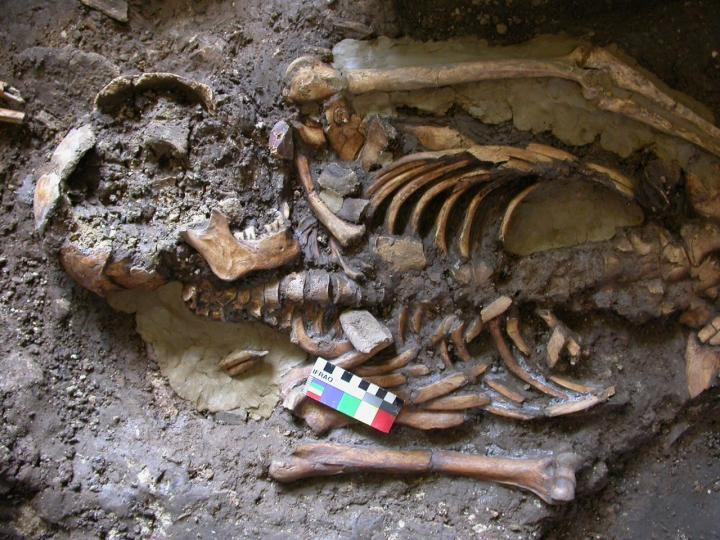
Fig.1.  DNA was extracted from molar teeth of this skeleton dating almost
10,000 years ago, found in Western Georgia (
Credit: Eppie Jones)

Between 4,800 and 5,000 years ago, nomadic herders swept through Europe from the vast steppe in modern-day Russia and Ukraine. These herders, part of the Yamnaya culture, made up one of three ancestral populations that formed the genetic structure of contemporary European populations. Yet findings published on Monday in the journal Nature Communications provide new details to this history and suggest that a previously unknown “fourth strand” of ancient European ancestry existed.

Friday, October 16, 2015

In the News: A Celebration of Bones

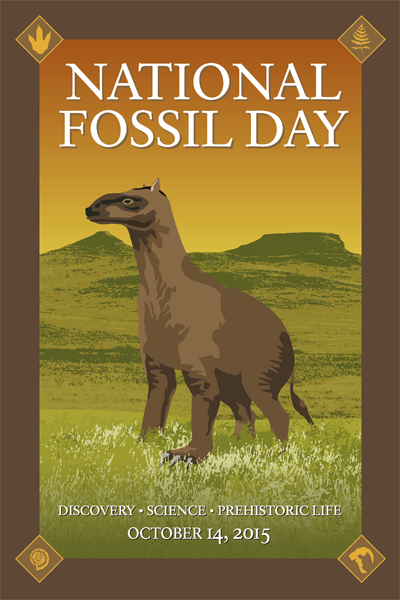
Fig.1 chalicothere in a Miocene grassland
(
Credit: National Fossil Day™ 2015)

In honor of National Fossil Day this week, learn about exciting finds in paleontology and paleoanthropology. From human migration to climate change, these bones open a new window into ancient history:

Wednesday, October 14, 2015

Ancient DNA and a History of Human Migration

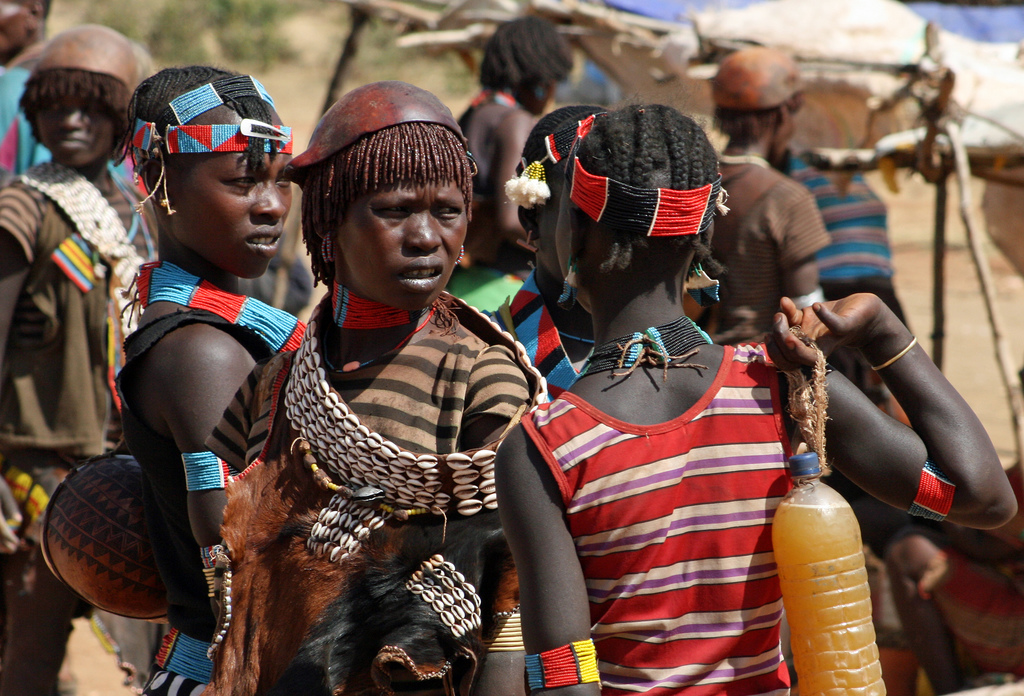
Fig.1. Members of the Ari tribe in modern southwest Ethiopia are probably direct
 descendants of the Mota man (Credit: Carsten ten Brink via Flickr)

Around 60,000 to 100,000 years ago, modern humans migrated out of Africa and proceeded to populate every corner of the world. Although ancient DNA analyses have added complexity to the routes of human migration, from Neolithic farmers to early hunter-gatherers in Europe, the birthplace of humanity has remained elusive. Among other challenges, regional hot temperatures that quickly degrade genetic material barred ancient African remains from such studies. However, in research published last week in the journal Science, a skeleton found in a remote cave in Ethiopia produced Africa’s first ancient human genome.

Friday, October 9, 2015

In the News: Heart Valves and Human Migration

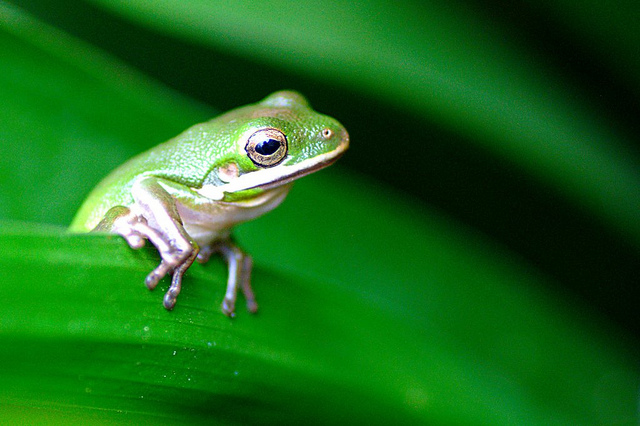
Fig.1. Frogs around the world are going extinct (Credit: Theodore Scott via Flickr)

Frog collections, iconic trees, and heart valves take center stage in the news this week. These unique collections help to elucidate the origins of human culture, preserve genetic material, protect biodiversity, and much more: