(Credit: Joachim Burger/JGU Mainz)
Showing posts with label ancient DNA. Show all posts
Monday, August 8, 2016
Thursday, May 19, 2016
A Brief History Camels (And Humans)
| Fig.1. Dromedaries in Israel (Credit: Wilson, 2011) |
For the past 3,000 years, single-humped camels, known as dromedaries (Camelus dromedarius), have provided an important source of food and transport to desert communities. The origin of the domesticated dromedary, however, remains relatively unknown. A recent article published in the journal Proceedings of the National Academy of Sciences, reveals some clues as to where and when humans started to depend upon these animals.
Labels:
agriculture
,
ancient DNA
,
climate change
,
DNA
,
environmental change
,
evolution
,
Food Security
,
genetics
Thursday, April 7, 2016
Millet and the Agricultural Revolution
| Fig.1. Professor Martin Jones with millet in north China (Credit: Martin Jones) |
Editor’s Note: Our Food Security Symposium has been postponed until September 2016. Please email us at scicoll@si.edu with any questions or join our mailing-list for routine updates on the new symposium.
Millet’s Long History
Recent research suggests that common millet (Panicum miliaceum) - often used as birdseed today - may have bridged the gap between nomadic hunter-gatherer cultures and agrarian societies in Neolithic Eurasia, holding possible lessons for current food security challenges.Monday, April 4, 2016
Monday Morning Coffee Break: April 4
(Credit: Lynn Johnson/National Geographic Creative)
Labels:
ancient DNA
,
cannabis
,
collection
,
DNA
,
genome
,
genomics
Monday, February 15, 2016
Monday Morning Coffee Break: Feb. 15
Labels:
ancient DNA
,
DNA
,
fossils
,
human migration
,
Monday
,
Monday morning coffee break
Friday, February 5, 2016
In the News: Mammoth for Dinner?
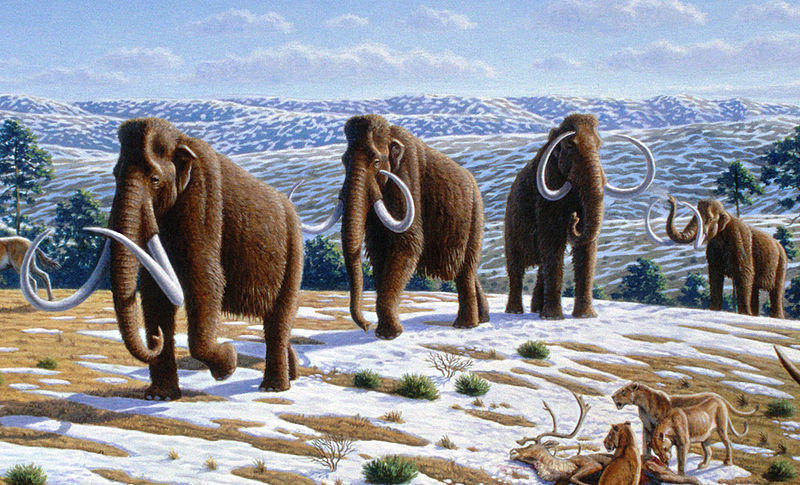
| Fig.1. Woolly mammoths (Mammuthus primigenius) in late Pleistocene landscape (Credit: Mauricio Antón, 2004) |

From ices cores to mammoth meat, this week is full of curiosities frozen in time. A return to these specimens reveals an important software error, a lesson in evolution, an answer to a decades-old question, and more:
Labels:
AMNH
,
ancient DNA
,
birds
,
bones
,
environmental change
,
evolution
,
extinction
,
Follow Friday
,
fossils
,
human migration
Monday, January 25, 2016
Monday Morning Coffee Break: Jan. 25
Labels:
ancient DNA
,
archaeology
,
DNA
,
DNA sequencing
,
Monday
,
Monday morning coffee break
Friday, January 15, 2016
In the News: What We Leave Behind
| Fig.1. Colosseum in Rome, Italy (Credit: David Iliff, 2007. License: CC-BY-SA 3.0) |
Although Ötzi the Iceman offers scientists an unprecedented view of early European life, such direct physical evidence is not always available. This week, researchers used parasites to track Romans, mammoth bones to study Arctic dwellers, and more to overturn previously held assumptions about the ancient world.
Labels:
ancient DNA
,
aqueducts
,
archaeology
,
Follow Friday
,
fossils
,
historical records
Wednesday, January 13, 2016
The Iceman's Stomach Bug
| Fig.1. Reconstruction of Ötzi (Credit: Thilo Parg/Wikimedia Commons, License: CC BY-SA 3.0) |
In 1991, two hikers stumbled upon a mummy high in the Ötztal Alps, right on the border between Austria and Italy. This mummy - nicknamed Ötzi, or the Iceman - is Europe’s oldest natural human mummy and is arguably one of the most studied cadavers in science. From his eye color (brown) to his dental health (poor), Ötzi reveals an amazing amount about how Europeans looked and lived 5,300 years ago. An international group of scientists released a study last week in the journal Science that added yet another detail to the treasure trove of research on the corpse, which may inform our understanding of ancient human migration into Europe.
Labels:
ancient DNA
,
archaeology
,
bacteria
,
emerging diseases
,
evolution
,
human migration
Tuesday, December 22, 2015
A Year in the Life of "Collections in the News"
| Fig.1. SciColl secretariat is housed at the National Museum of Natural History in D.C. (Credit: Don DeBold, 2012) |
With 158 articles published and more than a year underway, Collections in the News has sought to raise awareness about ongoing research done with scientific collections. This year brought visitors from 95 countries to our blog who read about a disease detective at the National Museum of Natural History, stopped for their Monday morning coffee break each week, and had the chance to learn how microbes and mammoth bones teach us more about our world.
Some blog highlights for 2015 include article series on international efforts that work to protect the planet’s soils and address climate change problems. We also participated in GIF week with Deep Sea News and celebrated Thanksgiving with maize scientists. Read more below about these article series!
Labels:
agriculture
,
ancient DNA
,
archaeology
,
citizen science
,
climate change
,
CO2
,
coffee
,
IYS
,
microbiology
,
oceans
,
permafrost
,
sediment cores
,
soil samples
,
teosinte
Monday, December 7, 2015
Monday Morning Coffee Break: Dec. 7
Labels:
ancient DNA
,
human migration
,
Monday
,
Monday morning coffee break
Wednesday, November 18, 2015
The Mystery of European Ancestry
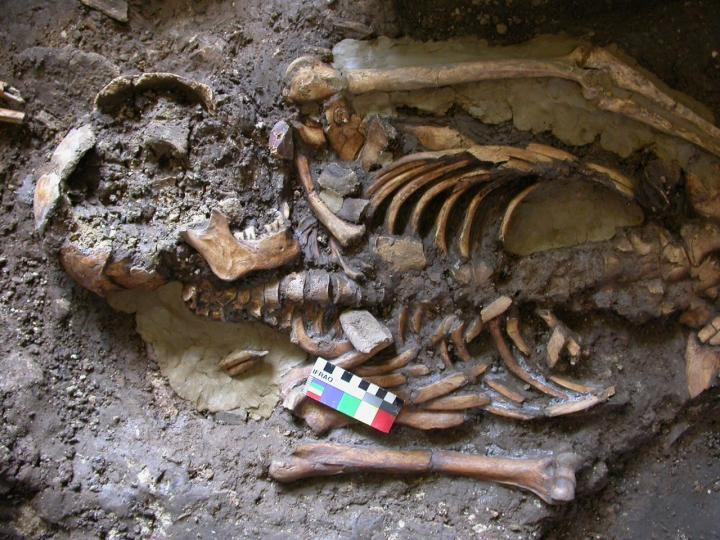
| Fig.1. DNA was extracted from molar teeth of this skeleton dating almost 10,000 years ago, found in Western Georgia (Credit: Eppie Jones) |
Between 4,800 and 5,000 years ago, nomadic herders swept through Europe from the vast steppe in modern-day Russia and Ukraine. These herders, part of the Yamnaya culture, made up one of three ancestral populations that formed the genetic structure of contemporary European populations. Yet findings published on Monday in the journal Nature Communications provide new details to this history and suggest that a previously unknown “fourth strand” of ancient European ancestry existed.
Labels:
ancient DNA
,
fossils
,
human migration
Monday, November 16, 2015
Monday Morning Coffee Break: Nov. 16
Labels:
ancient DNA
,
DNA
,
human migration
,
Monday
,
Monday morning coffee break
Wednesday, October 28, 2015
Striking Gold (Teeth) with Ancient Plague DNA
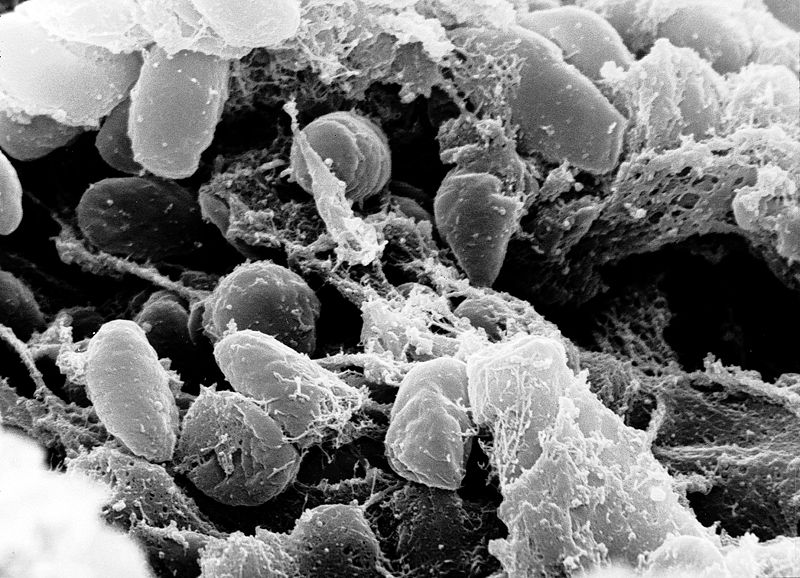
| Fig.1. Scanning electron micrograph of Yersinia pestis bacteria mass in foregut of a flea (Credit: Rocky Mountain Laboratories, NIAID, 2010) |
Since the beginning of the year, fifteen people in the United States have been infected with the bubonic plague, and four of those individuals have died. This disease, often only mentioned in context of the Black Death (1346-1353 AD) or the Justinian Plague (541-542 AD), still exists today in pockets around the world. The causative pathogen Yersinia pestis hides in natural reservoirs, such as black-tailed prairie dogs in the southwestern United States or marmots in the Eurasian Steppe, only to flare up in human populations when rodents and the fleas they carry get too close.
Despite the deadly history of the disease - the Black Death killed an estimated 60 percent of the European population - Y. pestis evolved from a much less virulent ancestor that caused symptoms closer to the common cold. Previous research pinpointed the first appearance of this bacterium in skeletal remains at 1,500 years ago, but a study released last week in the journal Cell pushes that date back to more than 5,000 years ago.
Labels:
ancient DNA
,
emerging diseases
,
plague
Friday, October 23, 2015
In the News: Beautiful Biodiversity
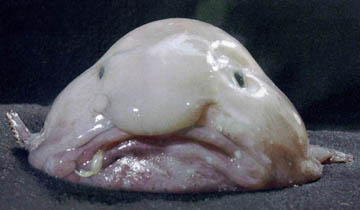
| Fig.1. Psychrolutes marcidus, otherwise known as the blobfish (Credit: Kinskarije via Flickr) |
The blobfish, seductive monkeys, and sea snakes are only some of the unusual museum specimens in the news this week. Read to learn about how to catalog and protect these amazing (if not quite beautiful) animals:
Labels:
ancient DNA
,
biodiversity
,
digital
,
Follow Friday
,
natural history
,
NHM
,
scientific collections
Wednesday, October 14, 2015
Ancient DNA and a History of Human Migration
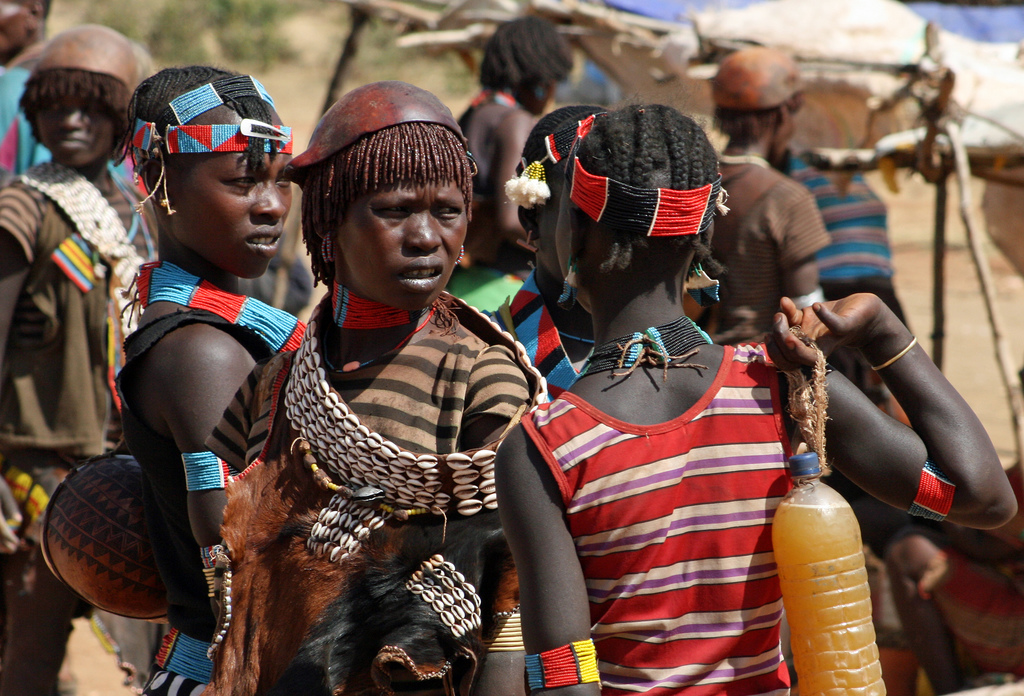
| Fig.1. Members of the Ari tribe in modern southwest Ethiopia are probably direct descendants of the Mota man (Credit: Carsten ten Brink via Flickr) |
Around 60,000 to 100,000 years ago, modern humans migrated out of Africa and proceeded to populate every corner of the world. Although ancient DNA analyses have added complexity to the routes of human migration, from Neolithic farmers to early hunter-gatherers in Europe, the birthplace of humanity has remained elusive. Among other challenges, regional hot temperatures that quickly degrade genetic material barred ancient African remains from such studies. However, in research published last week in the journal Science, a skeleton found in a remote cave in Ethiopia produced Africa’s first ancient human genome.
Monday, October 12, 2015
Monday Morning Coffee Break: Oct. 12
Labels:
ancient DNA
,
DNA
,
genomics
,
human migration
,
Monday
,
Monday morning coffee break
Tuesday, August 25, 2015
Ancient Giants in Warmer Times
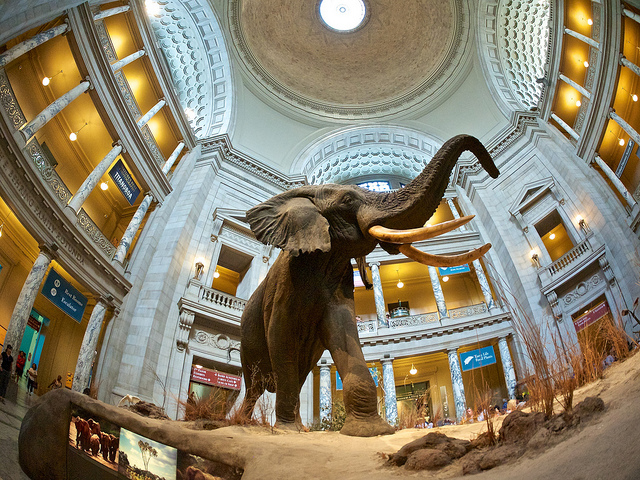
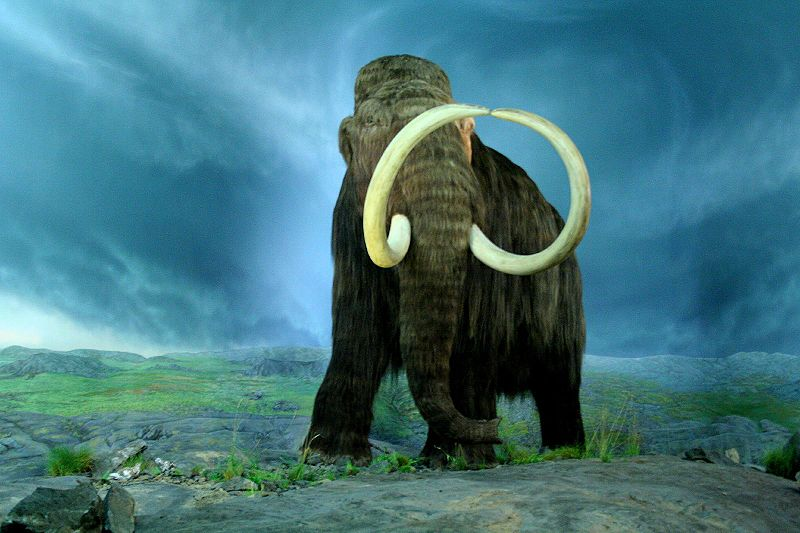
Fig.1. Woolly Mammoth at the Royal BC Museum, Victoria, British Columbia (Credit: Tracy O via Flickr)
Between 40,000 to 10,000 years ago, the world experienced a mass extinction of megafauna, a diverse group of animals that included such members as the mastodon and the woolly rhino. Although humans are often blamed for the disappearance of these creatures - either through overkill or habitat modification - the underlying causes are more complicated than previously thought
Monday, June 29, 2015
Monday Morning Coffee Break: June 29
Labels:
ancient DNA
,
DNA
,
human migration
,
Monday
,
Monday morning coffee break
Friday, June 26, 2015
In the News: Tracing History, from Roman Times to Chernobyl
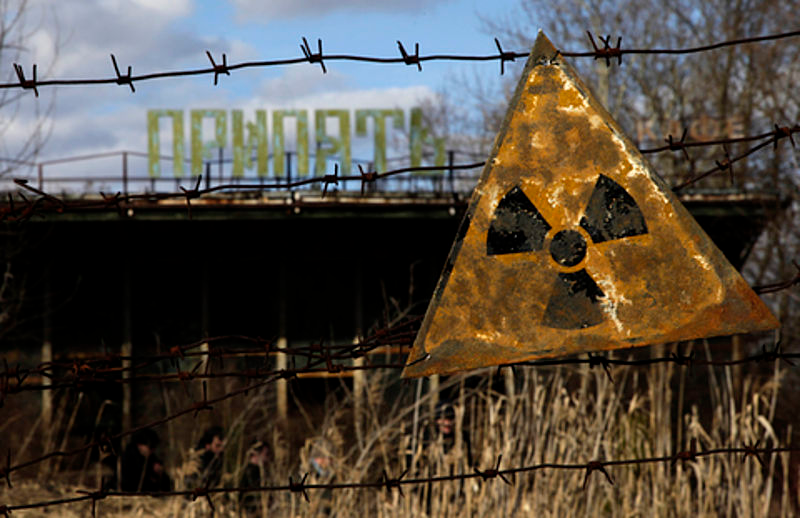
Fig.1. A radiation warning sign hangs on barbed wire outside a cafe in Pripyat, a city forced to evacuate after the Chernobyl disaster (Credit: D. Markosian, 2011)
Repositories can hold an amazing wealth of information, from genomic data on human evolution to environmental records of political change. Learn about these unique collections and the institutions that hold them in this Follow Friday post:
Labels:
ancient DNA
,
genebank
,
genomics
,
scientific collections
,
sediment cores
Subscribe to:
Posts
(
Atom
)