Showing posts with label space. Show all posts

Wednesday, May 4, 2016

A 4.5 Billion-Year-Old Mystery

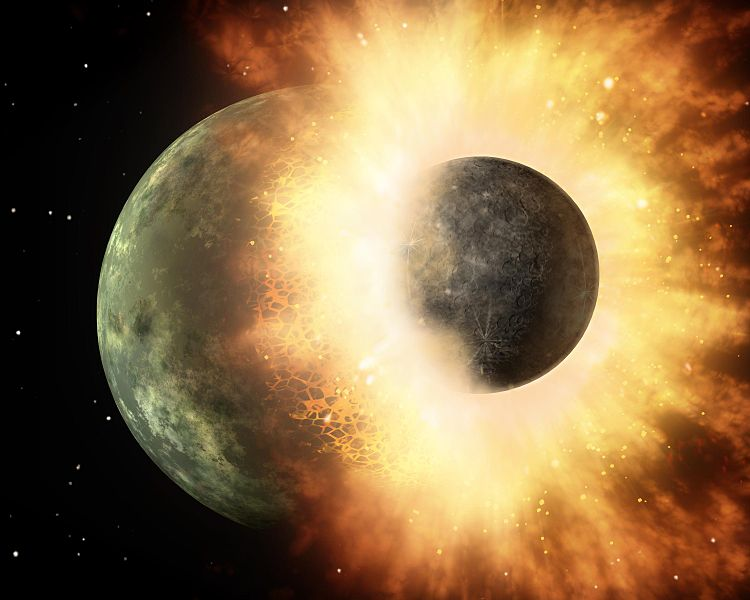
Fig.1. An artist’s concept of two celestial bodies the size of Mercury (left) 
and the Moon (right) colliding (Credit: NASA/JPL-Caltech, 2009)

Long before an asteroid hit Earth, killing off all non-avian dinosaurs, a much larger object crashed into our planet. This object, called Theia, is thought to have collided with proto-Earth around 4.5 billion years ago. Scientists think that a glancing blow shaped our early planet and created the Moon out of Theia’s remains. A recent article published in Science, however, may overturn this hypothesis regarding the formation of the Moon.

Wednesday, February 10, 2016

In the News: From Peru to Outer Space

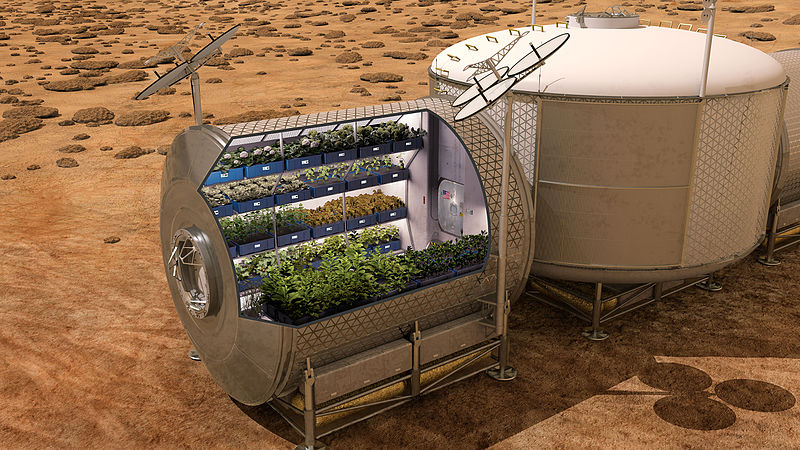
Fig.1. Illustration of a plant growth chamber on Mars (Credit: NASA, 2015)

Scientists from NASA have teamed up with the International Potato Center (CIP) in Peru to grow potatoes in Mars-like conditions for the benefit of possible manned-missions to our neighboring planet. This experiment - perhaps inspired by Mark Watney of The Martian - is just another exciting piece of news in agriculture and food security this month.

From ancient Scandinavia to outer space, collections are pushing the boundaries of our agricultural understanding. They reveal the history of food security and offer a future for agriculture in a world that must feed 7.4 billion people.

Friday, December 18, 2015

In the News: In A Galaxy Not So Far Away


Are you dreaming of a galaxy far, far away? These articles will bring you back to our solar system and our moon - not the Death Star - with news on digitizing the Apollo 11 Command Module, outer space amino acids, extreme underground microbes, and more:

Friday, August 14, 2015

In the News: To the Moon and Back


Fig.1. Full Moon photo taken from Madison, Alabama, USA (Credit: Gregory H. Revera, 2010)

These special collections contain over 400,000 bumblebees, around 5,000 marine mammals, 350 varieties of blueberries, and samples that are out of this world. Read about exciting research coming out of museum halls and herbaria for this week’s Follow Friday: