
We were pleased to attend the SPNHC and GGBN meetings last week in Berlin. We look forward to continuing the conversations with our many colleagues and other collections champions!
If you weren’t able to attend SPNHC, those sessions were recorded. Find them all on iDigBio’s site. David presented in the Collections for the Future session on Thursday afternoon and Eileen presented in the second DemoCamp session on Friday morning.
Our GGBN talks weren’t recorded, but we’ve uploaded the slides for David’s Thematic, Demand-driven Sampling: Economics of Three Strategies, his presentation for GGBN, and Scientific Collections, Food Security and Emerging Infectious Diseases, which he presented at SPNHC. Eileen’s A Global Registry of Scientific Collections: Striking a Balance Between Disciplinary Detail and Interdisciplinary Discoverability presentation are also uploaded. They can also be found in GGBN’s document library. (If you would like an account, send a request to: library@ggbn.org).
Showing posts with label SPNHC. Show all posts
Showing posts with label SPNHC. Show all posts
Friday, July 1, 2016

Monday, June 20, 2016
SPNHC/GGBN 2016, in Berlin, Germany
SciColl is excited to be attending the 2016 meetings of the Society for the Preservation of Natural History Collections (SPNHC) and the Global Genome Biodiversity Network (GGBN). We’re in Berlin, Germany for the week attending sessions and visiting one of our partner organizations, the Museum für Naturkunde.
We look forward to seeing many of our colleagues in Berlin and sharing the highlights on Twitter and back here on the blog.
Bis bald!
- David Schindel, SciColl’s Executive Board Chair, will present a keynote address at GGBN, Thematic, Demand-driven Sampling of the Tree of Life: Barcode of Wildlife Project, on Wednesday at 9:00.
- Eileen Graham, SciColl’s Program Manager, will moderate a GGBN Plenary session, We Can’t Save Them All: Assessing ex situ Conservation Across Time, Technology and the Uncertainty of the Future, on Thursday starting at 13:30.
- David will present Scientific Collections and Food Security: Their Role in Predicting and Protecting Our Future Food Supply at SPNHC on Thursday at 16:40.
- Eileen will give a live demonstration of GRSciColl in the SPNHC DemoCamp session on Friday at 10:20.
- Eileen will present A Global Registry of Scientific Collections: Striking a Balance Between Disciplinary Detail and Interdisciplinary Discoverability at GGBN on Friday at 11:45.
We look forward to seeing many of our colleagues in Berlin and sharing the highlights on Twitter and back here on the blog.
Bis bald!
Friday, May 22, 2015
Thursday, January 29, 2015
Smart Collecting: A New Collecting Culture
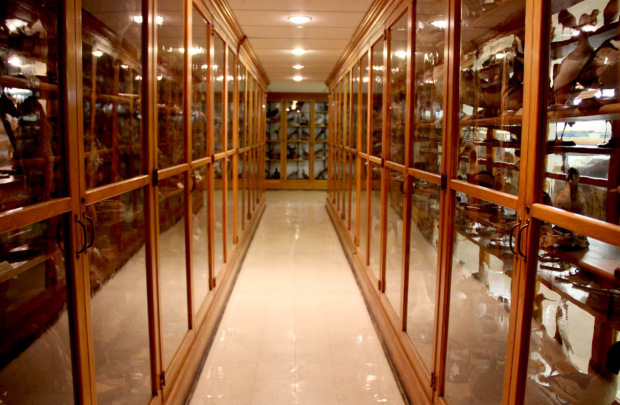
Fig.1. Antique Cabinet Museum in Pennsylvania holds many natural history curiosities (Credit: Michelle J. Enemark, 2011).
Editor's Note
This article first appeared as a post written by Adele Crane for Cracking the Collections, a blog run by the Emerging Professionals Group in the Society for the Preservation of Natural History Collections (SPNHC). This group aims to connect young professionals interested working with natural history collections to their peers and mentors.Adele is the program assistant for Scientific Collections International (SciColl), which is housed in the Smithsonian’s National Museum of Natural History. She manages the SciColl blog and other day-to-day program operations.
During the 1993 outbreak of a novel hantavirus in the Four Corners region of the United States, an effort to locate the pathogen's origin included investigating both human and animal samples in medical and natural history collections. A 1978 frozen tissue sample linked the outbreak pathogen to its natural reservoir in the deer mouse. Scientists were able to predict future outbreaks based on die-offs of local deer mouse populations. This piece of tissue from decades ago was never collected to provide the missing link between species, nor was it meant to be the basis for predicting an outbreak. However, this does show that without holistic and thorough sampling, collections cannot be used to their fullest potential.
Thursday, January 22, 2015
Predicting Parasites
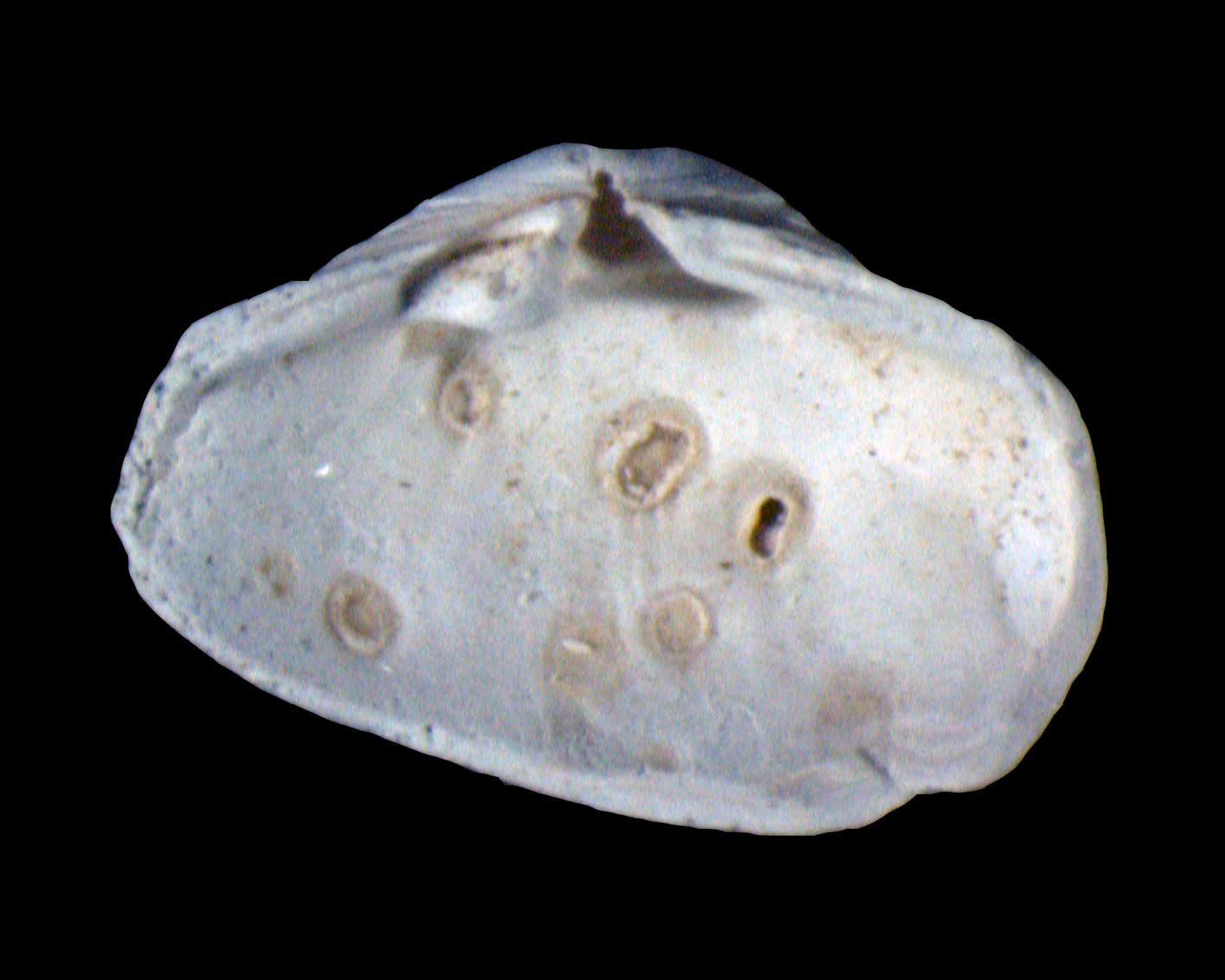
Fig.1. Estuarine clam Potamocorbula amurensis with oval-shaped pits induced by trematode worms (Credit: John Warren Huntley, 2015)
Last week, former President Jimmy Carter announced that the end was in sight for eradicating the waterborne Guinea worm disease. This parasitic affliction could be the second disease in human history to be eradicated. Unfortunately, just as the Guinea worm is declining, other parasitic diseases are on the rise. One researcher examined fossils from thousands of years ago to understand how parasites might change in the 21st century.
Subscribe to:
Posts
(
Atom
)