Fig.1. Papyrus before (left) and after (right) the Brooklyn Museum works its conservation magic. (Credit: The Brooklyn Museum)
From rock drawings preserved in place to the painstaking processes of lab-based specimen care, there’s lots to explore in this week’s round up of collections news:
Drawing conclusions: Researchers survey more than 250 rock sites in Australia to determine human origins. Through studying more than 30,000 rock drawings, University of Western Australia professor Peter Veth and company learn more about the Balanggarra people. Kimberley’s hidden world of Indigenous rock art revealed by researchers, The Guardian (October 2, 2016)
We love all types of collections, and we know there’s a lot that goes into maintenance of scientific collections. So how do you care for an art collection? How the Brooklyn Museum Cares for Its Collection, The Creators Project (October 4, 2016)
There’s always time for a good beer story. This time, a big-name outdoor company’s executive is exploring environmentally stable ingredients to brew in beer. Solving Climate Change With Beer From Patagonia’s Food Startup, Bloomberg (October 3, 2016)
One big happy family: Through the study of genomic data, scientists have determined a single exodus from Africa contributes to modern-day human populations. We’re from one African region: research, Deccan Chronicle (October 5, 2016)
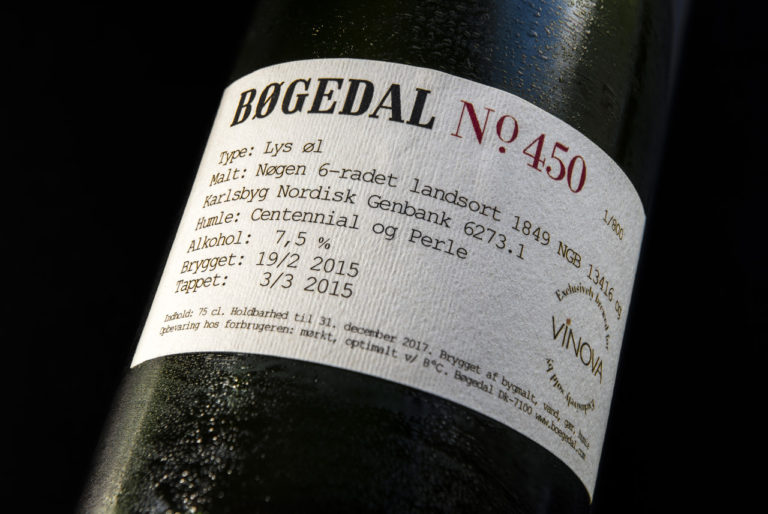
Fig.1. Some beer labels now display Genebank accession numbers. (Credit: Ove Fosså.)
A powerful DNA tool holds the answers to crop population genetic variations, and archaeologists discover tools that monkeys used to get their nut fix. That and more in our science news roundup.
We've talked about beer made with wild yeast - here's an assessment of how many barley varieties are actually utilized by the industry. You know the number is low when there is a brewery putting Genebank accession numbers on its labels: The biodiversity of beer, Agricultural Biodiversity Weblog (5 July 2016)
Humans aren’t the only ones with a history of using tools. Primate archaeologists have found evidence of 700-year-old tools used by capuchin monkeys to crack open nuts: Monkeys used stone tools 700 years ago, BBC News (12 July 2016)
If you study cancer, you probably were excited to hear about a new initiative to double the world’s number of cancer cell lines available to researchers (to 1,000!): Global Initiative Seeks 1,000 New Cancer Models, Scientific American (11 July 2016)