Showing posts with label environmental change. Show all posts

Friday, June 17, 2016

In the News: Creating Art and Spreading Hope

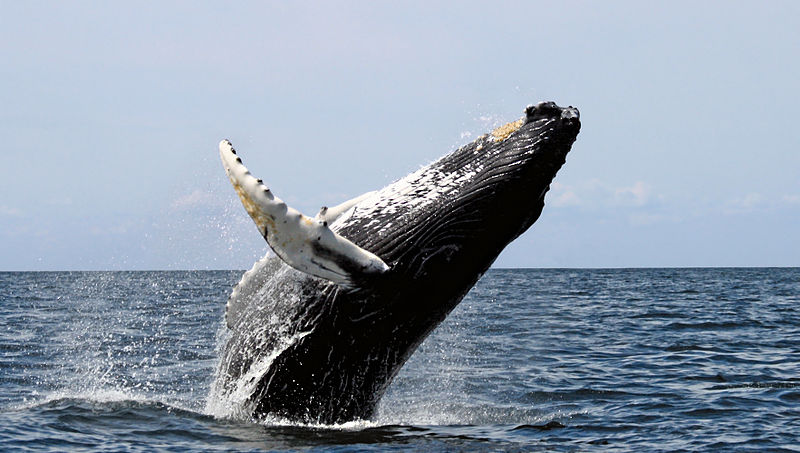
Fig.1. Humpback whale breaching in Stellwagen Bank National
Marine Sanctuary (
Credit: Whit Welles/2008)

Amidst fears for the planet’s future, these artists and marine biologists have a clear message of hope. From an active campaign to spread the word, to art that engages children and researchers, we can celebrate the biodiversity and beauty of our oceans. 

Thursday, May 19, 2016

A Brief History Camels (And Humans)

Fig.1. Dromedaries in Israel (Credit: Wilson, 2011)

For the past 3,000 years, single-humped camels, known as dromedaries (Camelus dromedarius), have provided an important source of food and transport to desert communities. The origin of the domesticated dromedary, however, remains relatively unknown. A recent article published in the journal Proceedings of the National Academy of Sciences, reveals some clues as to where and when humans started to depend upon these animals.

Thursday, April 28, 2016

Fossils and our Future Climate

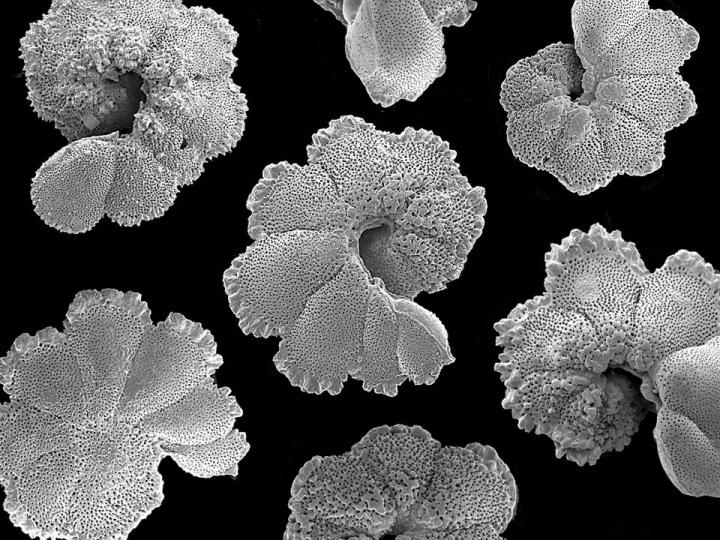
Fig.1. 40 million year old fossil planktonic foraminifera from Tanzania 
(Credit: Paul Pearson/Cardiff University)

According to a study published this week in the journal Nature, tiny fossils from 53 million to 36 million years ago may help to predict the future of climate change. This research, led by scientists from the University of Southampton and partners around the United Kingdom, sheds light on the relationship between atmospheric carbon dioxide (CO2) and climate during an ancient period in Earth’s history known as the Eocene Epoch.

Friday, February 5, 2016

In the News: Mammoth for Dinner?

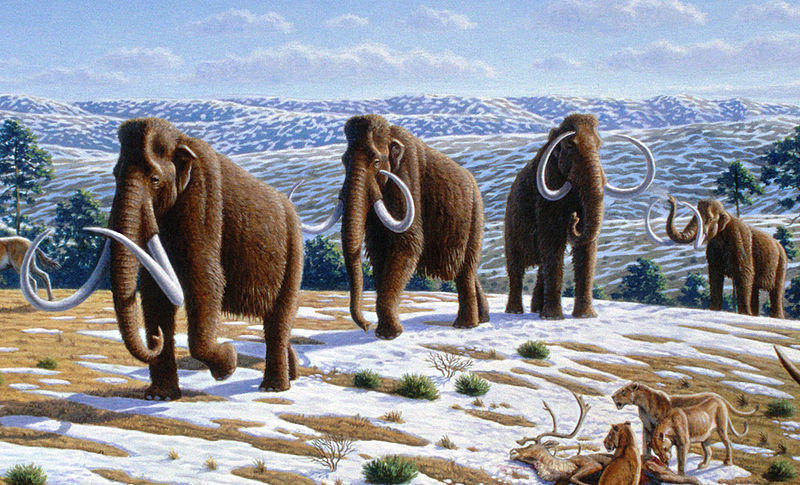
Fig.1. Woolly mammoths (Mammuthus primigenius) in late Pleistocene landscape
(
Credit: Mauricio Antón, 2004)

From ices cores to mammoth meat, this week is full of curiosities frozen in time. A return to these specimens reveals an important software error, a lesson in evolution, an answer to a decades-old question, and more:

Thursday, February 4, 2016

Ice Cores and the Ancient Man

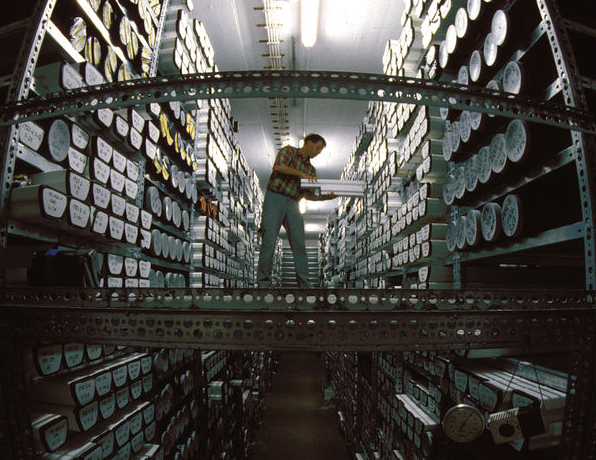
Fig.1. AWI Core Repository (Credit: Hannes Grobe/AWI, CC-BY-SA-2.5)

In 2003, paleoclimatologist William Ruddiman at the University of Virginia hypothesized that early humans significantly altered the climate by burning large areas of forests to clear land for farming and grazing. The greenhouse gases released into the atmosphere - mainly carbon dioxide and methane - halted a natural cooling cycle and possibly prevented another ice age.

Friday, January 22, 2016

In the News: Microbes and the Moon

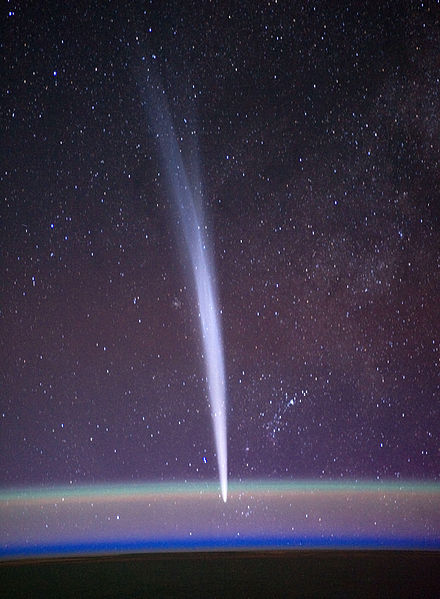
Fig.1. Comet Lovejoy visible near Earth’s horizon
(Credit: NASA/Dan Burbank, 2011)

From microscopic organisms to lunar rocks, these collections offer a rare view of our solar system. In the news this week are visits with curators who collect comet dust, find new species, protect banana crops, and more!

Friday, December 11, 2015

In the News: Moby-Dick and the Future Seas


As the climate talks in Paris come to a close - and as we wrap up GIF week with Deep Sea News - we learn more about ancient and recent marine collections that might save our warming seas. This week, we read about a miniature "Moby-Dick" from ancient times, the future of the Mediterranean, citizen science efforts, and more:

Wednesday, December 9, 2015

Bones of Coral Reefs

Fig.1. Coral depends upon algae for survival (Credit:via GIPHY)

In the middle of the Pacific Ocean, just off the small island of Kiritimati, corals are dying off at an astonishing rate. The small atoll, also called Christmas Island, suffers from high water temperatures caused by the current El Niño that have reached 4℃ above normal. Although these temperatures might be nice for a beachgoer, they do not bode well for the survival of the atoll’s extensive coral reefs.

Friday, December 4, 2015

In the News: Mammoths and Men

Fig.1. Mammoth skeleton at the George C. Page Museum
(Credit: Russ via Flickr, 2014)

Artifacts, sediment cores, and mammoth bones all connect us to ancient history, either through culture or the natural world. This week in the news, we read about how to examine the past using old collections in new ways:

Thursday, December 3, 2015

Of Ice and Insects

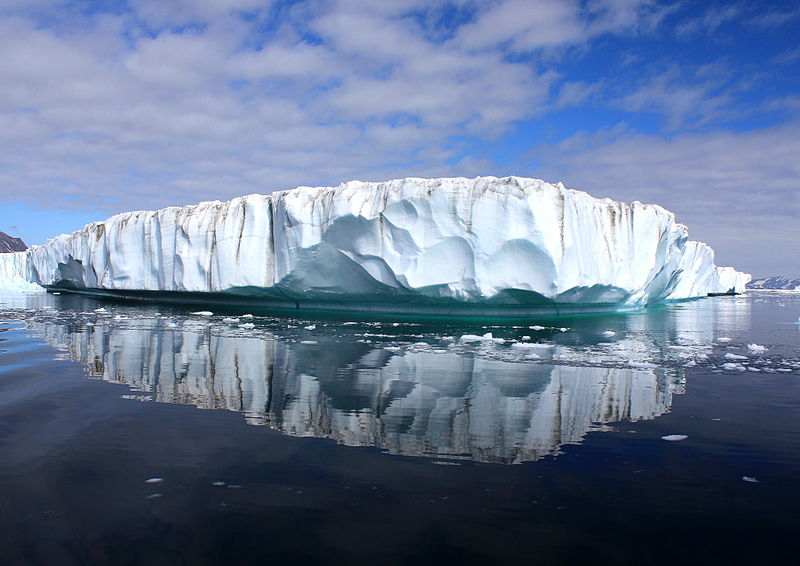
Fig.1. Greenland Ice Sheet (Credit: Christine Zenino, 2009)

Researchers at Stockholm University, Plymouth University, and the Natural History Museum, London (NHM) may have solved one of the most enduring puzzles from the last Ice Age. Around 12,880 years ago, the Northern Hemisphere experienced a sharp change in temperatures that culminated in a decrease of about 5℃ over 400 years. This event, called the Younger Dryas, is well documented in environmental records, but the cause had been largely unknown. In a study recently published in the journal Nature Communications, the researchers brought together three types of collections to address this mystery.

Tuesday, November 10, 2015

Teosinte Today, Maize Tomorrow

Fig.1. This photo, published in 1919, shows the stages between a simple spike of Euchlaena mexicana and an ear of maize. (Credit: Journal of Agriculture)

Jeffrey Ross-Ibarra, associate professor and section chair of the Department of Plant Sciences at the University of California at Davis, and his team study maize and teosinte evolution. Researchers and post-docs - with backgrounds in plant biology and population biology and integrated genetics and genomics - focus on various research areas, such as genetics and genomics, how human and environmental factors have affected the adaptation and domestication of crops and more.

“Domestication (of the crop) has always struck me as a really exciting story because it’s a case where the evolution of the plant was directed by, or affected by, humans,” Ross-Ibarra said about how he became interested in maize and teosinte research.