Showing posts with label scicollfood. Show all posts

Friday, September 30, 2016

Food security scientists talk collections, interdisciplinary research

Fig.1. Faith Bartz moderates the environmental stressors and benefits panel on Tuesday, Sept. 20, 2016. Participants included Muni Muniappan, Virginia Tech; Stephanie Yarwood, University of Maryland; Edna Makule, Nelson Mandela Africa Institute for Science and Technology; Maxine Levin, USDA-NCRS; and John Dickie, Kew Gardens. (Credit: Tricia Fulks Kelley)

BELTSVILLE, Md. -- Some of the world’s top researchers in food security met at the USDA National Agricultural Library from Sept. 19 to 21 to discuss scientific collections’ role in the research area.

Scientific Collections International, or SciColl, a global consortium devoted to promoting the use and impact of object-based scientific collections across disciplines, and the U.S. Department of Agriculture hosted the three-day event. The symposium allowed researchers from across disciplines to talk about the ever-increasing demand on food and how collections-based research can help in the challenges of feeding billions.

Wednesday, September 7, 2016

Climate change and phenology

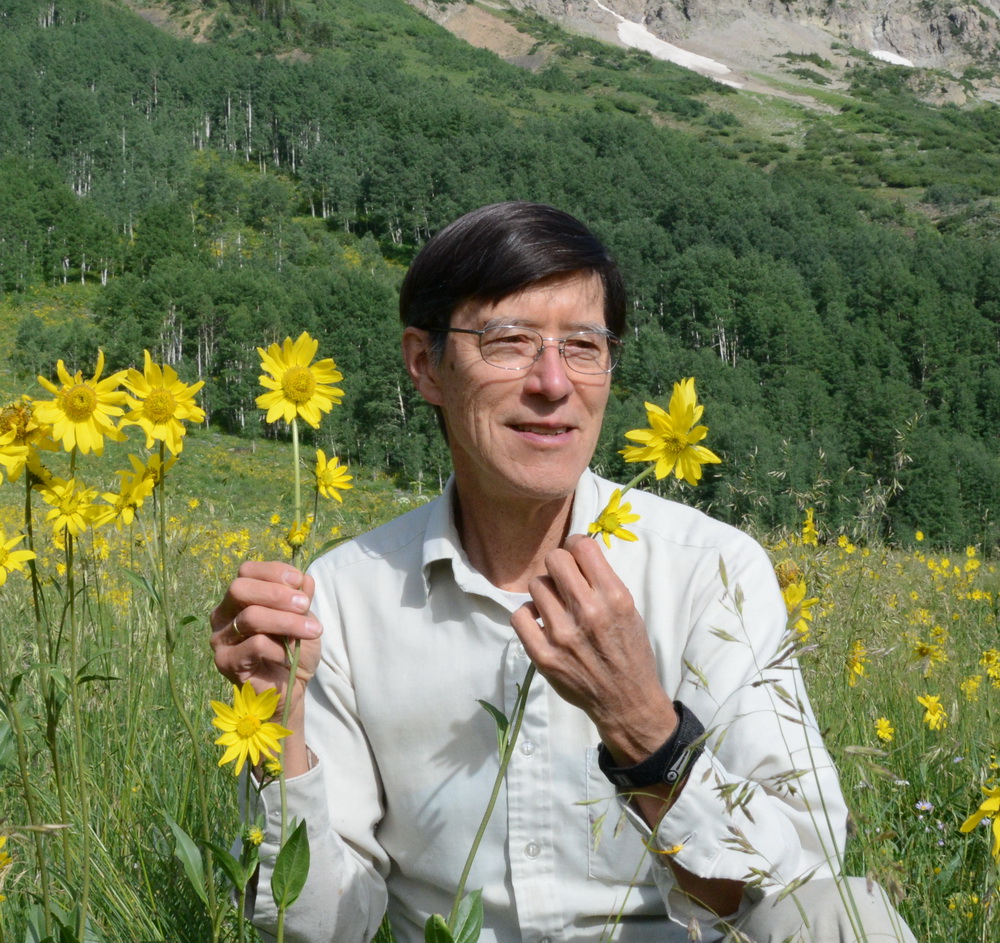
Fig.1. David Inouye studies phenology and climate change’s effect on pollinators, such as bees, hummingbirds and flies. (Credit: David Inouye)

When David Inouye looks out the window of his Colorado home, he’s looking at the mountains. He’s traded in the D.C. suburbs for this view, which also happens to be his office.

The professor emeritus of the University of Maryland has worked at the Rocky Mountain Biological Laboratory throughout his career, focusing on phenology and climate change’s effect on pollinators. Inouye specifically studies hummingbirds, bumblebees and flies. He has collaborated on other projects studying butterflies and solitary bees. As a graduate student in the 1970s, Inouye began to study how the timing and abundance of flowering of plants changes from day to day, year to year. With 30 plots to study during growing season and gathering data from 120 different species, the study has been ongoing.

Tuesday, August 2, 2016

Food security workshop registration now open


We are pleased to invite you to register for our symposium, Stressors and Drivers of Food Security: Evidence from Scientific Collections. The symposium will be hosted by the US Department of Agriculture at the National Agriculture Library in Beltsville, Maryland, just outside Washington, D.C., Monday to Wednesday, 19-21 September 2016.

Friday, March 25, 2016

Wild Plants and the Future of Crops

Fig.1. Members of CIAT’s Genetic Resources Program in the minus 20℃
gene bank 
(Credit: Neil Palmer/CIAT, 2010)

According to a recent study in the journal Nature Plants, around 95 percent of wild relatives of agricultural crops are insufficiently safeguarded in gene banks around the world. These crop wild relatives (CWR) are closely related to domesticated plants and have become increasingly important in efforts to protect crops against threats like drought, pests, and disease.