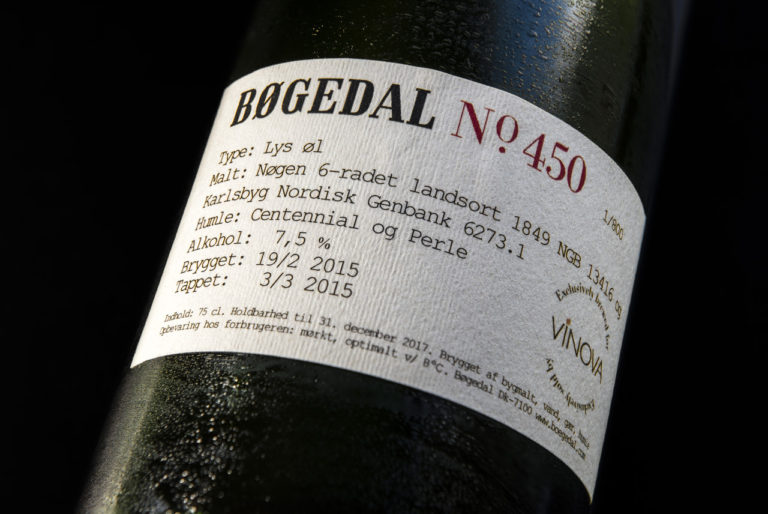
Fig.1. Some beer labels now display Genebank accession numbers. (Credit: Ove Fosså.)
A powerful DNA tool holds the answers to crop population genetic variations, and archaeologists discover tools that monkeys used to get their nut fix. That and more in our science news roundup.
We've talked about beer made with wild yeast - here's an assessment of how many barley varieties are actually utilized by the industry. You know the number is low when there is a brewery putting Genebank accession numbers on its labels: The biodiversity of beer, Agricultural Biodiversity Weblog (5 July 2016)
Humans aren’t the only ones with a history of using tools. Primate archaeologists have found evidence of 700-year-old tools used by capuchin monkeys to crack open nuts: Monkeys used stone tools 700 years ago, BBC News (12 July 2016)
If you study cancer, you probably were excited to hear about a new initiative to double the world’s number of cancer cell lines available to researchers (to 1,000!): Global Initiative Seeks 1,000 New Cancer Models, Scientific American (11 July 2016)
What do you get when you mix archaeology, ecology, wildlife management, and conservation genomics? No, this isn’t a tagline similar to a duck-in-a-bar joke. What you have is an emerging field of studying called conservation archaeogenomics.
At the forefront of this work are Robert Fleischer and Jesús Maldonado, both of the Center for Conservation Genomics (CCG) at the Smithsonian Conservation Biology Institute and National Zoo. The purpose of archaeogenomics is to use genomic methods to learn how humans impacted the environment over time, and Fleischer and Maldonado use this information to make recommendations for conservation.
In a laboratory, just outside downtown Portland, Mowgli Holmes and his team at Phylos Bioscience are embarking on a brave new world.
“We’re creating the first genetically defined collection that has ever been,” he said. “... We know less about it than any other crop.”
That crop Holmes is referring to is cannabis, and that collection he and his team of genetic researchers have been working on the past couple of years is an extensive genomic dataset. Holmes and his group will expand upon the "draft" genomics work previously done.
For the past 3,000 years, single-humped camels, known as dromedaries (Camelus dromedarius), have provided an important source of food and transport to desert communities. The origin of the domesticated dromedary, however, remains relatively unknown. A recent article published in the journal Proceedings of the National Academy of Sciences, reveals some clues as to where and when humans started to depend upon these animals.
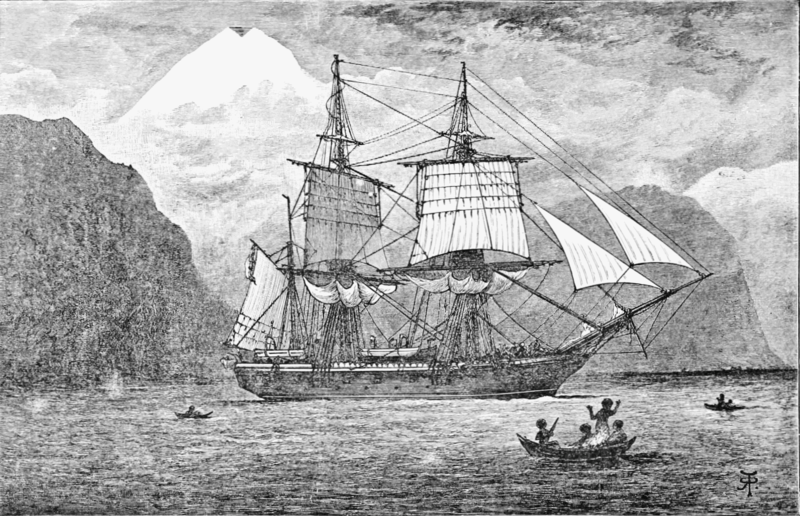
On 11 May 1820, the HMS Beagle was launched from the Woolwich Dockyard on the River Thames. Out of three voyages around the world to survey both land and sea, its second and easily most famous voyage cemented the ship’s role in history, thanks to the efforts of a young passenger named Charles Darwin. Now, nearly 200 years later, scientists have returned to the same birds that came to symbolize Darwin’s work in a study that captures evolution in action.
Editor's Note: This is the second in a series of videos we will release in 2016 about the use of scientific collections and DNA technology.
Torsten Dikow has traveled around the world to find the perfect fit. And he seems to have found it at the Smithsonian’s National Museum of Natural History (NMNH).
Editor's Note: This is the first in a series of videos we will release in 2016 about the use of scientific collections and DNA technology.
When it comes to reliable plant identification in their work,
Ida Lopez and Dr. Caroline Puente, of the Smithsonian’s National Museum of
Natural History (NMNH) Plant DNA Barcoding Project, botany department, have a
tool most associate with the retail world. But barcodes, in this case DNA
barcodes, are creating many research opportunities in the scientific world in
areas of ecology, evolution, conservation and more.
A DNA barcode, which is made up of approximately 600 base pairs of the species’ entire genome,
can authentically identify down to the species level. A commonly used barcode marker
in animals is
the mitochondrial gene cytochrome oxidase 1 (CO1). This gene however does
not successfully identify plant species.
“We knew that in animals the CO1 site was very indicative,”
Lopez said. “Zoologists could just sequence this one site and tell exactly what
type of animal it was.”
Because the CO1 gene has evolved slower in plants, it is not
useful to identify plant species. So around 10 years ago, researchers, under the direction of John Kress,NMNH Department of Botany curator,began looking for candidate genes
in plants. They found that they needed a combination of at least two
chloroplast regions - rbcL and trnH-psbA -to
create a workable plant DNA barcode. Today matK, another chloroplast
gene, and a nuclear region – the Internal Transcribed Spacer (ITS) are
added to insure success.
While
researchers agree that fresh tissue is ideal for extracting DNA, Puente said
that in cases where scientists can’t revisit a location to collect samples,
museum collections, in this case botanical specimens, are invaluable.
“One of the
big advantages of DNA barcoding is that we do not need a lot of tissue material”
Puente said. “... You can barcode small organisms such as insects and bacteria
- anything that has DNA even in limited amounts.”
A tissue
sample just a little larger than a pencil eraser is enough for DNA extraction
and barcoding. Lopez and Puente have specimens at their fingertips in the
Department of Botany’s vast collection at NMNH. The collectionholds 5 million specimens, with
approximately 105,000 of those serving as type
specimens. To learn more about Lopez and Puente's work, visit The Plant DNA Barcode Project.
References
W. John Kress, Carlos García-Robledo, Maria Uriarte, and David L. Erickson (2014, November 19). DNA barcodes for ecology, evolution, and conservation. CellPress, vol 30 (1): 25-35. doi: 10.1016/j.tree.2014.10.008
W. John Kress, David L. Erickson. (2007, June 6) A Two-Locus Global DNA Barcode for Land Plants: The Coding rbcL Gene Complements the Non-Coding trnH-psbA Spacer Region. PLOSOne(6): e508. doi: 10.1371/journal.pone.0000508