Showing posts with label scientific collections. Show all posts

Tuesday, October 17, 2017

Scientific Collections vs. Pandemics: an unfair match?

Fig. 1. Ebola Signs and Symptoms.

Editor’s Note: SciColl held our first community workshop on Emerging Infectious Diseases in October 2014. This October we're posting several pieces that highlight the important work where collections continue to play an integral role.

Editor’s Note: SciColl intern, Ebubechi Okpalugo from Pembroke College, contributed this article as part of her time in the SciColl office during Summer 2017.

Sweeping across three countries and claiming over 11,000 lives, the 2014 West African Ebola outbreak is almost impossible to forget. First identified in 1976, in a remote village named Zaire in what is now the Democratic Republic of Congo, there have been multiple outbreaks of the virus since. But the 2014 pandemic, caused by the Zaire strain, has been the most deadly. Striking on the border of three of the poorest African nations, Sierra Leone, Guinea and Liberia, the virus spread to an unprecedented scale. Liberia, the worst hit, was not officially declared Ebola-free until the 13th of January 2016.

Could it have been stopped quicker? That’s where scientific collections come in.

Friday, December 30, 2016

Best Of 2016: A year of visual communication


via GIPHY

2016 rang in with a new medium for us at SciColl: a video series! This year we jumped feet-first into video profiles of folks working with collections every day. We inquired about how they use collections, who they collaborate with, and how collections-based research is unlike any other. The stories are as diverse as the collections, and we’re looking forward to bringing you more in 2017!
  • Interested in plants and how to study the tallest trees in the forest if you can’t get to canopy? Check out The Ultimate Identifier.
  • Flies are everywhere, but these kinds of flies are often easier to find in collections than the field. Learn more in The Assassin (Flies) of Entomology.
  • What do archaeology, wildlife management and conservation genomics have in common? Check out The Archaeogenomics Equation and learn how this interdisciplinary field got started.
  • We also collaborated with our friends at Biodiversity Heritage Library to revamp one of their 2014 blog posts into a video: Monsters Are Real. Is it just us, or do these monsters seemingly come to life when animated with an appropriate soundtrack?
Looking for more? We always are, and compile the best from around the web on our YouTube Channel. Come see what we have in our playlists:
We look forward to a blog-filled 2017 and hope you’ll continue to join us!

Friday, December 23, 2016

Best Of 2016: Peeking behind the curtain

In 2016, our most popular articles included a profile of David Inouye (left) leading up to our food security workshop; the engineering behind biorepositories; and a piece about the challenge in describing new or undescribed species.

Without further ado, the end of the year “most read” list is here! Looking at the posts that captivated the largest audiences, it seems this year people were particularly intrigued by stories that pulled the curtain back on collections, their operations, and how to apply the information inside.

In Describing the Undescribed, we learned how to describe a new species with the particular challenge of ensuring you’re not re-describing an already named species. When working in small geographic areas or on a group of closely related species, collections can help researchers verify their new species and highlight what makes them unique.

In The Engineering Behind Repositories, we discussed the challenges of operating a repository. In addition to housing specimens in the appropriate containers to planning out the current collection size and its growth potential, repository managers have to worry about maintaining the right environmental conditions. Errors in technology can have a profound impact on sensitive collections and it pays to have a backup system - even if it never gets used.

Lastly, in Climate Change and Phenology, one of the keynote speakers from our Food Security Symposium explained how his work on pollinators and their ecology can be useful when working to reduce their decline and subsequent loss of ecosystem services. The importance of this work - and the work of pollinators - cannot be overstated.

Many folks also stopped by the blog to check out our new video series! We’ll recap that series and some other videos we’re paying attention to next week!

Friday, September 30, 2016

Food security scientists talk collections, interdisciplinary research

Fig.1. Faith Bartz moderates the environmental stressors and benefits panel on Tuesday, Sept. 20, 2016. Participants included Muni Muniappan, Virginia Tech; Stephanie Yarwood, University of Maryland; Edna Makule, Nelson Mandela Africa Institute for Science and Technology; Maxine Levin, USDA-NCRS; and John Dickie, Kew Gardens. (Credit: Tricia Fulks Kelley)

BELTSVILLE, Md. -- Some of the world’s top researchers in food security met at the USDA National Agricultural Library from Sept. 19 to 21 to discuss scientific collections’ role in the research area.

Scientific Collections International, or SciColl, a global consortium devoted to promoting the use and impact of object-based scientific collections across disciplines, and the U.S. Department of Agriculture hosted the three-day event. The symposium allowed researchers from across disciplines to talk about the ever-increasing demand on food and how collections-based research can help in the challenges of feeding billions.

Friday, July 15, 2016

The Archaeogenomics Equation


What do you get when you mix archaeology, ecology, wildlife management, and conservation genomics? No, this isn’t a tagline similar to a duck-in-a-bar joke. What you have is an emerging field of studying called conservation archaeogenomics.

At the forefront of this work are Robert Fleischer and Jesús Maldonado, both of the Center for Conservation Genomics (CCG) at the Smithsonian Conservation Biology Institute and National Zoo. The purpose of archaeogenomics is to use genomic methods to learn how humans impacted the environment over time, and Fleischer and Maldonado use this information to make recommendations for conservation.

Thursday, July 7, 2016

The Greatest Hits

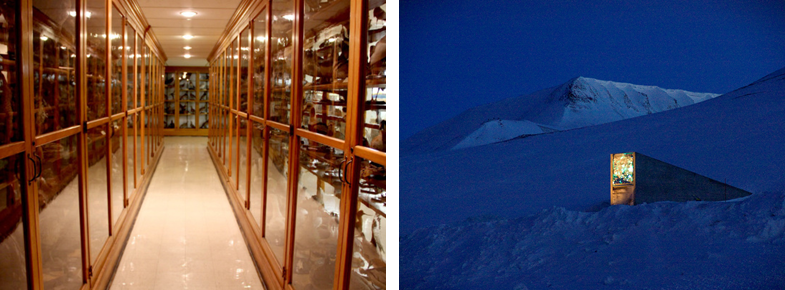
Fig.1. Museum in Pennsylvania (Credit: Michelle J. Enemark, 2011) and the Svalbard Global Seed Vault 
 (Credit: Mari Tefre, Global Crop Diversity Trust, via Flickr

Editor’s Note: After two years of exciting and engaging work, staff writer Adele Crane will be leaving Scientific Collections International for graduate school in Arizona. Out of 214 posts garnering more than 34,500 views, Adele chose some of her favorite articles.


From a small natural history museum in Pennsylvania to a seed-bank built to survive doomsday scenarios, collections reside all around the world in many forms. My work over the past two years with Scientific Collections International (SciColl) has been to chip away at only a fraction of the specimens and samples out there, exploring a slew of topics from microbes in your backyard to moon rocks - and on rare cases, even both!

When we initially started the blog, we wanted to connect collections to disease research and response. Articles on cross-disciplinary and novel approaches to outbreaks would lead up to SciColl’s very first workshop on Emerging Infectious Diseases. The workshop was indeed timely, coinciding with the Ebola epidemic in Africa, and it highlighted the need to make this type of active outreach ongoing, instead of sporadic.

Perhaps as a preface to the type of work I will pursue in graduate school, my favorite articles were a fantastic education on how to bridge unique specimens with historic and current disease research. To break down the broad topic of “emerging infectious diseases,” we focused on smaller case studies of known and relatively unknown pathogens that affect millions around the world:

  • Disease Collections and How They Can Save the World: In 1976, a broken vial of blood transported in luggage from the Democratic Republic of the Congo found its way to the young Belgian scientist, Peter Piot. The blood carried one of the most feared pathogens in current disease research. 

  • C. Miguel Pinto, the Disease Detective: A conversation with C. Miguel Pinto in our very own museum explored the cross-section of disease research and classic taxonomy, in which basic evolutionary principles are tested. 
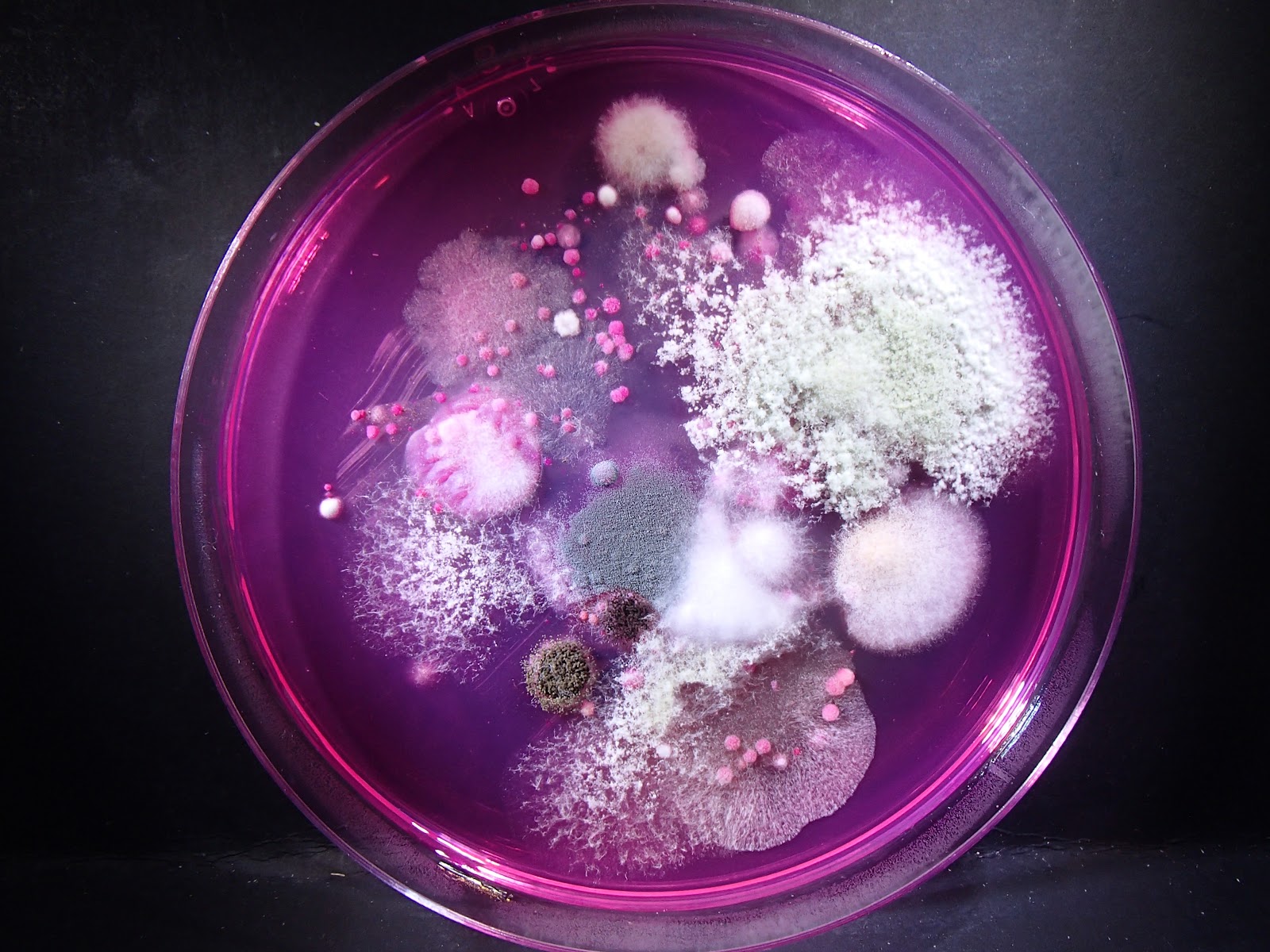
Fig.2. Plate of microorganisms that were cultured from the soil
(Credit: Julia Stevens)

Over the course of the blog, we looked beyond case studies and current research challenges. How can ancient specimens inform future problems? There are many examples where collections were used to further important research in areas like environmental change and food security.

When we take a step back, the larger impacts of educating the next generation of scientists or bringing countries together to protect biodiversity are extraordinarily important. After working with SciColl, I am grateful to have gained that perspective and I hope to hear many more of these stories in years to come:

  • Microbes and Middle Schools: Citizen science has the ability to reach both students and researchers in powerful ways. Collections that not only support invasive species studies but engage middle schoolers in science are a cornerstone of ongoing work at the North Carolina Museum of Natural Sciences. 

  • Seeds for the End of the World: Seed banks preserve both biological diversity and cultural heritage. Banks around the world, from Peru to Norway, are working to provide a future for agriculture and historical practices. 

  • Smart Collecting: A New Collecting Culture: What began as a short discussion in our Emerging Infectious Disease workshop turned into a larger conversation about a “collecting culture” that could be improved for museums and biobanks alike.

Tuesday, July 5, 2016

Save the Date: Food Security Symposium


We are excited to announce the symposium “Stressors and Drivers of Food Security: Evidence from Scientific Collections,” which will bring together researchers and experts on scientific collections across disciplines to address issues regarding food security. This symposium will be held September 19 to 21 at the National Agriculture Library in Beltsville, Md., and will be hosted by the U.S. Department of Agriculture and Scientific Collections International.

Monday, June 20, 2016

SPNHC/GGBN 2016, in Berlin, Germany

SciColl is excited to be attending the 2016 meetings of the Society for the Preservation of Natural History Collections (SPNHC) and the Global Genome Biodiversity Network (GGBN). We’re in Berlin, Germany for the week attending sessions and visiting one of our partner organizations, the Museum für Naturkunde.

  • David Schindel, SciColl’s Executive Board Chair, will present a keynote address at GGBN, Thematic, Demand-driven Sampling of the Tree of Life: Barcode of Wildlife Project, on Wednesday at 9:00.

  • Eileen Graham, SciColl’s Program Manager, will moderate a GGBN Plenary session, We Can’t Save Them All: Assessing ex situ Conservation Across Time, Technology and the Uncertainty of the Future, on Thursday starting at 13:30.

  • David will present Scientific Collections and Food Security: Their Role in Predicting and Protecting Our Future Food Supply at SPNHC on Thursday at 16:40.

  • Eileen will give a live demonstration of GRSciColl in the SPNHC DemoCamp session on Friday at 10:20.

  • Eileen will present A Global Registry of Scientific Collections: Striking a Balance Between Disciplinary Detail and Interdisciplinary Discoverability at GGBN on Friday at 11:45.

We look forward to seeing many of our colleagues in Berlin and sharing the highlights on Twitter and back here on the blog.

Bis bald!

Thursday, March 31, 2016

The Assassin (Flies) of Entomology


Editor's Note: This is the second in a series of videos we will release in 2016 about the use of scientific collections and DNA technology.

Torsten Dikow has traveled around the world to find the perfect fit. And he seems to have found it at the Smithsonian’s National Museum of Natural History (NMNH).

Thursday, February 25, 2016

GRSciColl: Connecting to Collections


SciColl is currently hosting a workshop on the Global Registry of Scientific Collections (GRSciColl). This online database holds information on institutions and their wide array of  scientific collections, from mammals to meteors, and everything in between. We have gathered experts on collections and databases to discuss how to improve the registry for the needs of the community.

We are part of a larger conversation on the accessibility and relevance of long-forgotten specimens hidden in museums or in the corners of laboratories. Databases and networks in the field of anthropology are different from the biomedical sciences; the community of agricultural scientists is different from that of earth scientists. In one room, we hope to cross boundaries on how researchers and curators connect to collections, as well as the wider world.

Here are a few recent contributions to this conversation in the media:

  • Natural history collections represent our planet’s biodiversity today, as well as from a century ago. Some new species will only ever be found in the halls of these institutions as they are lost to nature: “Natural History Museums Are Teeming With Undiscovered Species,” The Atlantic (08 February 2016) 

  • Museums are often at the front of communicating science. Recent studies - from asteroid research to the water crisis in Michigan - show that this conversation should go both ways: “Scientists Should Talk To The Public, But Also Listen,” Scientific American (05 February 2016) 

Wednesday, February 10, 2016

In the News: From Peru to Outer Space

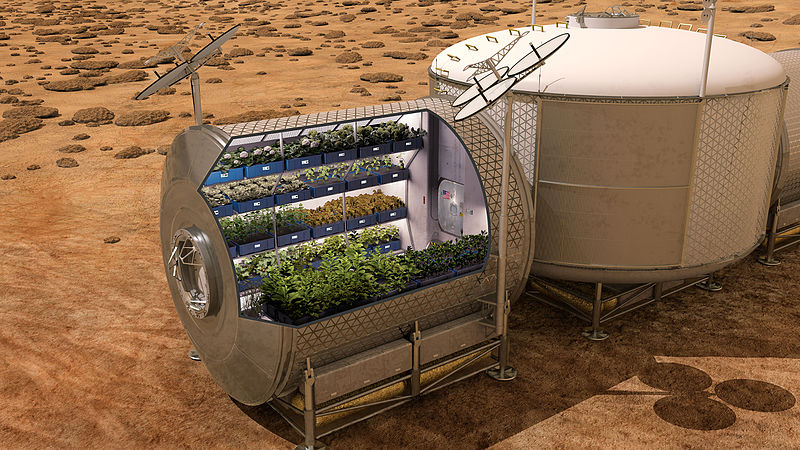
Fig.1. Illustration of a plant growth chamber on Mars (Credit: NASA, 2015)

Scientists from NASA have teamed up with the International Potato Center (CIP) in Peru to grow potatoes in Mars-like conditions for the benefit of possible manned-missions to our neighboring planet. This experiment - perhaps inspired by Mark Watney of The Martian - is just another exciting piece of news in agriculture and food security this month.

From ancient Scandinavia to outer space, collections are pushing the boundaries of our agricultural understanding. They reveal the history of food security and offer a future for agriculture in a world that must feed 7.4 billion people.

Wednesday, January 20, 2016

Sea Turtles and Atomic Bombs

Fig.1. Hawksbill sea turtle, Eretmochelys imbricata
(Credit: Clark Anderson/Aquaimages, 2006)

At 5:30 a.m. on July 16, 1945, the first nuclear weapon was detonated under code name “Trinity.” Although disagreement still remains as to the start or nature of the Anthropocene, many scientists agree that nuclear weapons testing caused a widespread anthropogenic signal in the geologic record. In a couple short decades, these weapons tests doubled the amount of the radioactive isotope carbon-14 in our atmosphere. The isotope in the air entered plants during photosynthesis and animal tissues as animals ate the plants, leaving behind a radioactive trace in the natural world.
 

Friday, January 8, 2016

In the News: PNAS Editorial Released

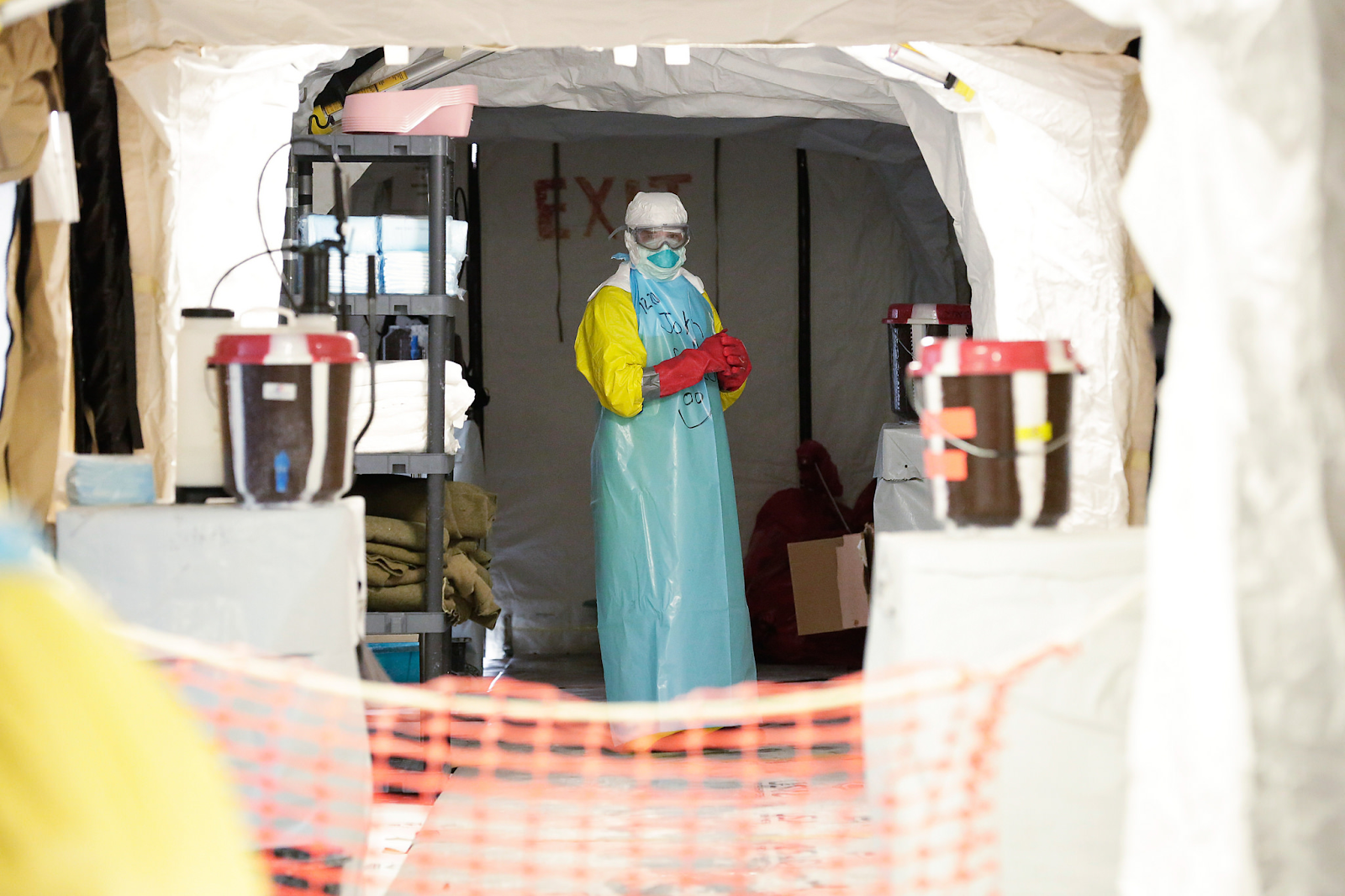
Fig.1. Ebola response worker in full personal protective equipment
 (
Credit: UNMEER via Flickr, 2014

An editorial based on SciColl’s 2014 workshop on emerging infectious diseases has just been released in the Proceedings of the National Academy of Sciences. From the first case to a worldwide eradication effort, scientific collections are necessary for disease research and response. This week, public health officials join in the fight against mysterious diseases and call for increased communication and collaboration.

Tuesday, December 29, 2015

A Year in the Life of Scientific Collections

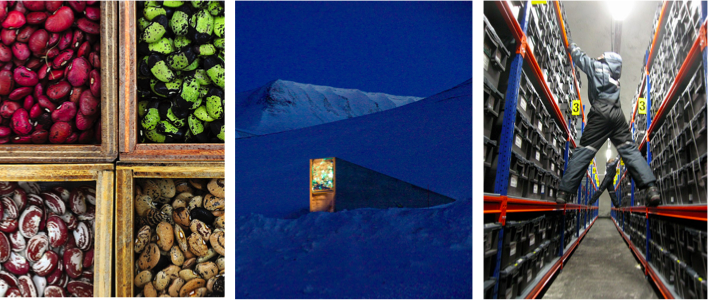
Fig.1. Scenes from the Svalbard Global Seed Vault (Credit left to right: Neil Palmer/CIAT, 2011Mari Tefre/Global Crop Diversity Trust, 2008Dag Terje Filip Endresen/Svalbard Global Seed Vault, 2008)

Earlier this year, the International Center for Agricultural Research in the Dry Areas (ICARDA) made a request to withdraw seeds from the Svalbard Global Seed Vault, which holds more than 850,000 samples from every country in the world. This request is the first of its kind for the “Doomsday Vault” that holds duplicate seed samples for national and international gene banks. The Syrian civil war forced ICARDA to move its headquarters from Aleppo, Syria, to Beirut, Lebanon, in 2012, and researchers managed to save 80 percent of the seed samples by sending them into storage at Svalbard.

Although such a withdrawal will allow ICARDA to regenerate these precious samples, it reveals the vulnerability of collections to war or even natural disasters. The year of 2015 marked a specific effort by individuals and organizations around the world to protect and sustain scientific collections, from those housed in natural history museums to frozen specimens in gene banks. We identified major trends that have affected both how collections are viewed in science and policy, as well as how they can be protected for generations to come. Read to learn more about what happened in the collections world this year, and what you should watch out for in 2016.

Thursday, December 3, 2015

Of Ice and Insects

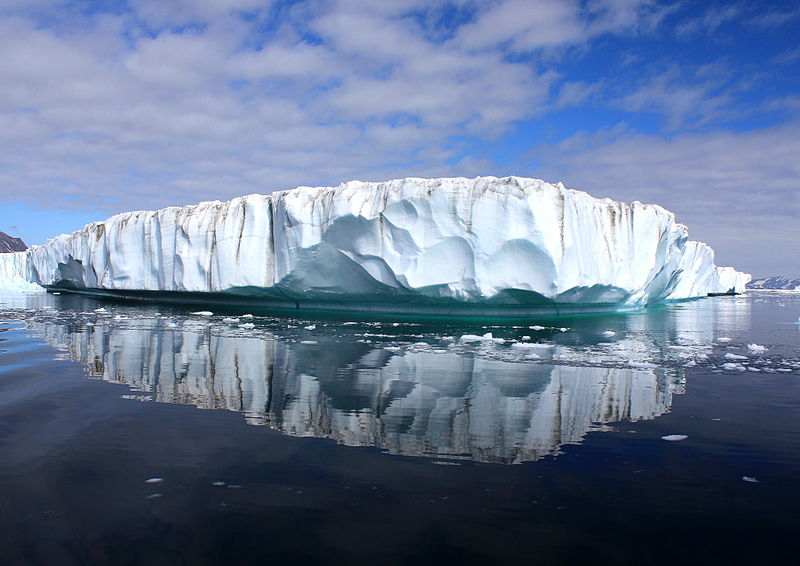
Fig.1. Greenland Ice Sheet (Credit: Christine Zenino, 2009)

Researchers at Stockholm University, Plymouth University, and the Natural History Museum, London (NHM) may have solved one of the most enduring puzzles from the last Ice Age. Around 12,880 years ago, the Northern Hemisphere experienced a sharp change in temperatures that culminated in a decrease of about 5℃ over 400 years. This event, called the Younger Dryas, is well documented in environmental records, but the cause had been largely unknown. In a study recently published in the journal Nature Communications, the researchers brought together three types of collections to address this mystery.

Friday, November 20, 2015

In the News: Bones of Blue Whales

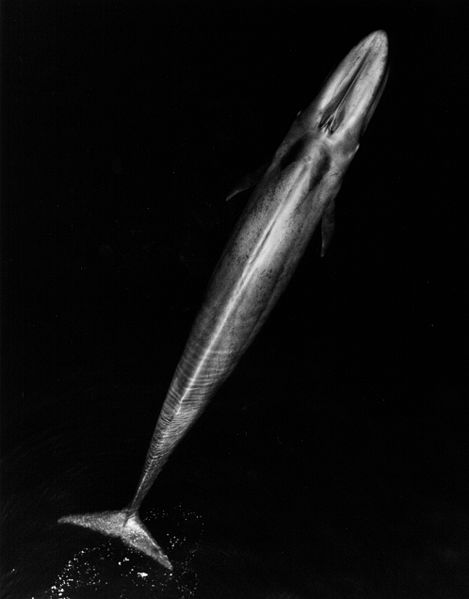
Fig.1. Blue whale from above
(
Credit: NOAA Fisheries, 2007)

What happens when a blue whale washes up on shore? This week in the news, scientists and students had the chance of a lifetime to study rare animals from around the world, from blue whales in Oregon to mysterious arachnids near the Dead Sea.