Showing posts with label NMNH. Show all posts

Tuesday, October 17, 2017

Scientific Collections vs. Pandemics: an unfair match?

Fig. 1. Ebola Signs and Symptoms.

Editor’s Note: SciColl held our first community workshop on Emerging Infectious Diseases in October 2014. This October we're posting several pieces that highlight the important work where collections continue to play an integral role.

Editor’s Note: SciColl intern, Ebubechi Okpalugo from Pembroke College, contributed this article as part of her time in the SciColl office during Summer 2017.

Sweeping across three countries and claiming over 11,000 lives, the 2014 West African Ebola outbreak is almost impossible to forget. First identified in 1976, in a remote village named Zaire in what is now the Democratic Republic of Congo, there have been multiple outbreaks of the virus since. But the 2014 pandemic, caused by the Zaire strain, has been the most deadly. Striking on the border of three of the poorest African nations, Sierra Leone, Guinea and Liberia, the virus spread to an unprecedented scale. Liberia, the worst hit, was not officially declared Ebola-free until the 13th of January 2016.

Could it have been stopped quicker? That’s where scientific collections come in.

Thursday, July 7, 2016

The Greatest Hits

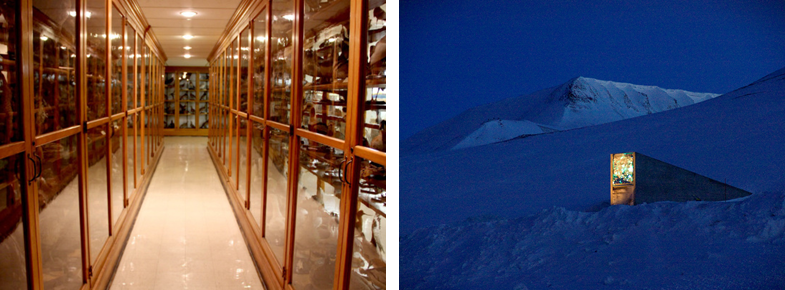
Fig.1. Museum in Pennsylvania (Credit: Michelle J. Enemark, 2011) and the Svalbard Global Seed Vault 
 (Credit: Mari Tefre, Global Crop Diversity Trust, via Flickr) 

Editor’s Note: After two years of exciting and engaging work, staff writer Adele Crane will be leaving Scientific Collections International for graduate school in Arizona. Out of 214 posts garnering more than 34,500 views, Adele chose some of her favorite articles.


From a small natural history museum in Pennsylvania to a seed-bank built to survive doomsday scenarios, collections reside all around the world in many forms. My work over the past two years with Scientific Collections International (SciColl) has been to chip away at only a fraction of the specimens and samples out there, exploring a slew of topics from microbes in your backyard to moon rocks - and on rare cases, even both!

When we initially started the blog, we wanted to connect collections to disease research and response. Articles on cross-disciplinary and novel approaches to outbreaks would lead up to SciColl’s very first workshop on Emerging Infectious Diseases. The workshop was indeed timely, coinciding with the Ebola epidemic in Africa, and it highlighted the need to make this type of active outreach ongoing, instead of sporadic.

Perhaps as a preface to the type of work I will pursue in graduate school, my favorite articles were a fantastic education on how to bridge unique specimens with historic and current disease research. To break down the broad topic of “emerging infectious diseases,” we focused on smaller case studies of known and relatively unknown pathogens that affect millions around the world:

  • Disease Collections and How They Can Save the World: In 1976, a broken vial of blood transported in luggage from the Democratic Republic of the Congo found its way to the young Belgian scientist, Peter Piot. The blood carried one of the most feared pathogens in current disease research. 

  • C. Miguel Pinto, the Disease Detective: A conversation with C. Miguel Pinto in our very own museum explored the cross-section of disease research and classic taxonomy, in which basic evolutionary principles are tested. 
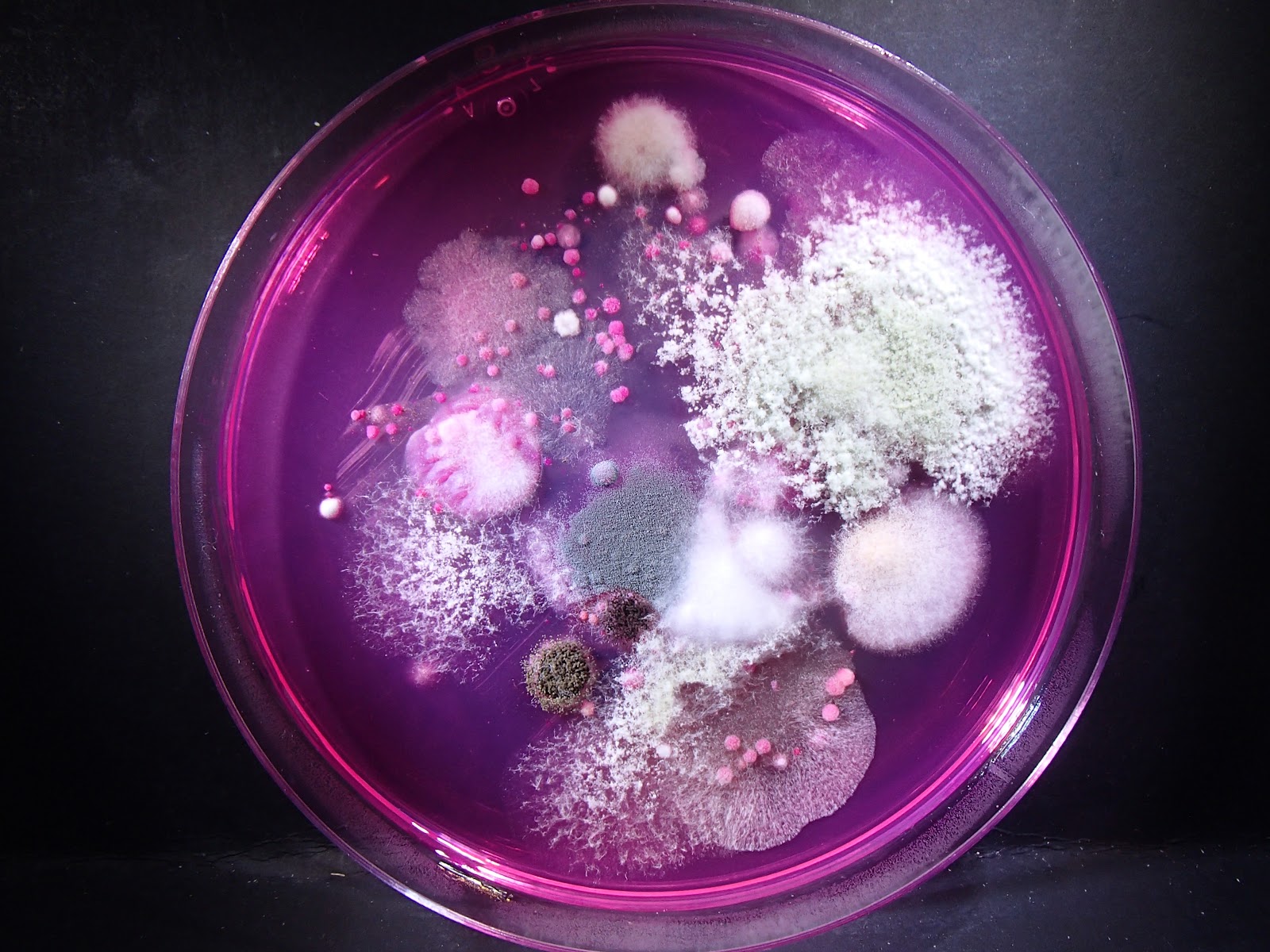
Fig.2. Plate of microorganisms that were cultured from the soil
(Credit: Julia Stevens)

Over the course of the blog, we looked beyond case studies and current research challenges. How can ancient specimens inform future problems? There are many examples where collections were used to further important research in areas like environmental change and food security.

When we take a step back, the larger impacts of educating the next generation of scientists or bringing countries together to protect biodiversity are extraordinarily important. After working with SciColl, I am grateful to have gained that perspective and I hope to hear many more of these stories in years to come:

  • Microbes and Middle Schools: Citizen science has the ability to reach both students and researchers in powerful ways. Collections that not only support invasive species studies but engage middle schoolers in science are a cornerstone of ongoing work at the North Carolina Museum of Natural Sciences. 

  • Seeds for the End of the World: Seed banks preserve both biological diversity and cultural heritage. Banks around the world, from Peru to Norway, are working to provide a future for agriculture and historical practices. 

  • Smart Collecting: A New Collecting Culture: What began as a short discussion in our Emerging Infectious Disease workshop turned into a larger conversation about a “collecting culture” that could be improved for museums and biobanks alike.

Thursday, March 31, 2016

The Assassin (Flies) of Entomology


Editor's Note: This is the second in a series of videos we will release in 2016 about the use of scientific collections and DNA technology.

Torsten Dikow has traveled around the world to find the perfect fit. And he seems to have found it at the Smithsonian’s National Museum of Natural History (NMNH).

Wednesday, January 27, 2016

The Ultimate Identifier


Editor's Note: This is the first in a series of videos we will release in 2016 about the use of scientific collections and DNA technology.

When it comes to reliable plant identification in their work, Ida Lopez and Dr. Caroline Puente, of the Smithsonian’s National Museum of Natural History (NMNH) Plant DNA Barcoding Project, botany department, have a tool most associate with the retail world. But barcodes, in this case DNA barcodes, are creating many research opportunities in the scientific world in areas of ecology, evolution, conservation and more.

A DNA barcode, which is made up of approximately 600 base pairs of the species’ entire genome, can authentically identify down to the species level. A commonly used barcode marker in animals is the mitochondrial gene cytochrome oxidase 1 (CO1). This gene however does not successfully identify plant species.

“We knew that in animals the CO1 site was very indicative,” Lopez said. “Zoologists could just sequence this one site and tell exactly what type of animal it was.”

Because the CO1 gene has evolved slower in plants, it is not useful to identify plant species. So around 10 years ago, researchers, under the direction of John Kress, NMNH Department of Botany curator, began looking for candidate genes in plants. They found that they needed a combination of at least two chloroplast regions - rbcL and trnH-psbA - to create a workable plant DNA barcode. Today matK, another chloroplast gene, and a nuclear region – the Internal Transcribed Spacer (ITS) are added to insure success.

While researchers agree that fresh tissue is ideal for extracting DNA, Puente said that in cases where scientists can’t revisit a location to collect samples, museum collections, in this case botanical specimens, are invaluable.

“One of the big advantages of DNA barcoding is that we do not need a lot of tissue material” Puente said. “... You can barcode small organisms such as insects and bacteria - anything that has DNA even in limited amounts.”

A tissue sample just a little larger than a pencil eraser is enough for DNA extraction and barcoding. Lopez and Puente have specimens at their fingertips in the Department of Botany’s vast collection at NMNH. The collection holds 5 million specimens, with approximately 105,000 of those serving as type specimens.

To learn more about Lopez and Puente's work, visit The Plant DNA Barcode Project.


References
W. John Kress, Carlos García-Robledo, Maria Uriarte, and David L. Erickson (2014, November 19). DNA barcodes for ecology, evolution, and conservation. CellPress, vol 30 (1): 25-35. doi: 10.1016/j.tree.2014.10.008

What is DNA Barcoding? Barcode of Life. Retrieved from http://www.barcodeoflife.org/content/about/what-dna-barcoding 

W. John Kress, David L. Erickson. (2007, June 6) A Two-Locus Global DNA Barcode for Land Plants: The Coding rbcL Gene Complements the Non-Coding trnH-psbA Spacer Region. PLOSOne(6): e508. doi: 10.1371/journal.pone.0000508

Search the Department of Botany Collections. Smithsonian National Museum of Natural History. Retrieved from http://collections.nmnh.si.edu/search/botany/

Plant DNA Barcode Project. Smithsonian National Museum of Natural History. Retrieved from http://botany.si.edu/projects/DNAbarcode/


Glossary

type specimens
The representative for an animal or plant species, which acts as a reference point when a species is first named.

Tuesday, November 10, 2015

Teosinte Today, Maize Tomorrow

Fig.1. This photo, published in 1919, shows the stages between a simple spike of Euchlaena mexicana and an ear of maize. (Credit: Journal of Agriculture)

Jeffrey Ross-Ibarra, associate professor and section chair of the Department of Plant Sciences at the University of California at Davis, and his team study maize and teosinte evolution. Researchers and post-docs - with backgrounds in plant biology and population biology and integrated genetics and genomics - focus on various research areas, such as genetics and genomics, how human and environmental factors have affected the adaptation and domestication of crops and more.

“Domestication (of the crop) has always struck me as a really exciting story because it’s a case where the evolution of the plant was directed by, or affected by, humans,” Ross-Ibarra said about how he became interested in maize and teosinte research.

Thursday, November 5, 2015

C. Miguel Pinto, the Disease Detective

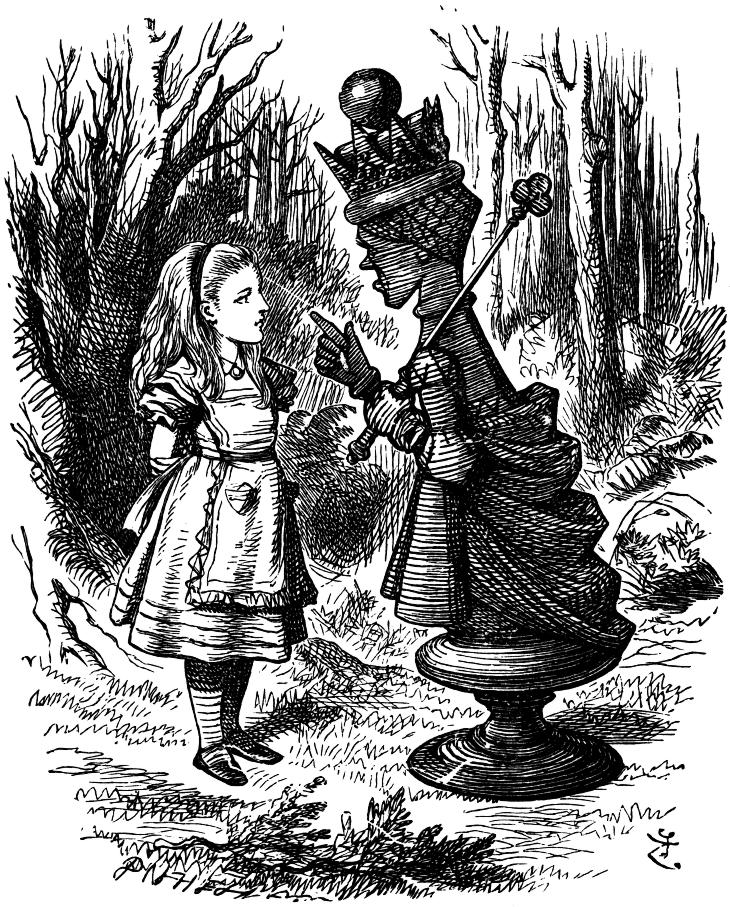
Fig.1. Red Queen lecturing Alice (Credit: John Tenniel, 1871)

“Now, here, you see, it takes all the running you can do to keep in the same place,”
- Lewis Carroll’s Through the Looking Glass

In Lewis Carroll’s Through the Looking Glass, Alice once again finds herself in a fantastical world. A chess piece called the Red Queen describes the rules of the Looking-Glass land, claiming that no matter how far Alice runs, the girl will stay in the same place. Evolutionary biologist Leigh Van Valen adopted this story in 1973 to illustrate the concept of an evolutionary arms race in which species must constantly evolve to remain extant. In symbiotic relationships, like that of parasites and hosts, an adaptation in one will affect the other. Therefore these organisms continually evolve, or “run,” to counter pressures posed by the opposite in order to survive.

This type of relationship fascinates C. Miguel Pinto, a George E. Burch and Peter Buck Postdoctoral Fellow at Smithsonian’s National Museum of Natural History (NMNH). He explores the evolutionary underpinnings of mammals and the parasites they hold. In particular, Pinto studies Trypanosoma parasites in bats.