Showing posts with label collections. Show all posts

Tuesday, October 31, 2017

Grandma, what a big brain you have!

All the better to survive with, my dear


Used with permission from Nicola L. Robinson.

Editor’s Note: SciColl held our first community workshop on Emerging Infectious Diseases in October 2014. This October we're posting several pieces that highlight the important work where collections continue to play an integral role.

Editor’s Note: SciColl intern, Ebubechi Okpalugo from Pembroke College, contributed this article as part of her time in the SciColl office during Summer 2017.

Sit down with a prehistoric relative of ours from the genus Homo - their extinction making it a lot easier said than done - and you’ll notice something significantly different: their heads, and therefore brains, are a fraction of the size of a modern human’s. Why exactly did brain size increase? Quite simply, large and complex brains can process and store more information, which was hugely beneficial to humans as they developed skills and social interaction.

The Smithsonian NMNH Human Origins exhibit houses a collection of fossil skull remnants dating back as far as 3 million years ago, as well as silicon reconstructions of early humans. One can see a gradual change in facial features, body hair and most significantly, head shape and size. Over the course of human evolution, it’s found that brain size tripled, with the modern human brain being the largest and most complex of any living primate. But, size alone doesn't tell us much about thinking ability.

Here’s a bit of what we know. 

Tuesday, October 17, 2017

Scientific Collections vs. Pandemics: an unfair match?

Fig. 1. Ebola Signs and Symptoms.

Editor’s Note: SciColl held our first community workshop on Emerging Infectious Diseases in October 2014. This October we're posting several pieces that highlight the important work where collections continue to play an integral role.

Editor’s Note: SciColl intern, Ebubechi Okpalugo from Pembroke College, contributed this article as part of her time in the SciColl office during Summer 2017.

Sweeping across three countries and claiming over 11,000 lives, the 2014 West African Ebola outbreak is almost impossible to forget. First identified in 1976, in a remote village named Zaire in what is now the Democratic Republic of Congo, there have been multiple outbreaks of the virus since. But the 2014 pandemic, caused by the Zaire strain, has been the most deadly. Striking on the border of three of the poorest African nations, Sierra Leone, Guinea and Liberia, the virus spread to an unprecedented scale. Liberia, the worst hit, was not officially declared Ebola-free until the 13th of January 2016.

Could it have been stopped quicker? That’s where scientific collections come in.

Friday, December 30, 2016

Best Of 2016: A year of visual communication


via GIPHY

2016 rang in with a new medium for us at SciColl: a video series! This year we jumped feet-first into video profiles of folks working with collections every day. We inquired about how they use collections, who they collaborate with, and how collections-based research is unlike any other. The stories are as diverse as the collections, and we’re looking forward to bringing you more in 2017!
  • Interested in plants and how to study the tallest trees in the forest if you can’t get to canopy? Check out The Ultimate Identifier.
  • Flies are everywhere, but these kinds of flies are often easier to find in collections than the field. Learn more in The Assassin (Flies) of Entomology.
  • What do archaeology, wildlife management and conservation genomics have in common? Check out The Archaeogenomics Equation and learn how this interdisciplinary field got started.
  • We also collaborated with our friends at Biodiversity Heritage Library to revamp one of their 2014 blog posts into a video: Monsters Are Real. Is it just us, or do these monsters seemingly come to life when animated with an appropriate soundtrack?
Looking for more? We always are, and compile the best from around the web on our YouTube Channel. Come see what we have in our playlists:
We look forward to a blog-filled 2017 and hope you’ll continue to join us!

Friday, December 23, 2016

Best Of 2016: Peeking behind the curtain

In 2016, our most popular articles included a profile of David Inouye (left) leading up to our food security workshop; the engineering behind biorepositories; and a piece about the challenge in describing new or undescribed species.

Without further ado, the end of the year “most read” list is here! Looking at the posts that captivated the largest audiences, it seems this year people were particularly intrigued by stories that pulled the curtain back on collections, their operations, and how to apply the information inside.

In Describing the Undescribed, we learned how to describe a new species with the particular challenge of ensuring you’re not re-describing an already named species. When working in small geographic areas or on a group of closely related species, collections can help researchers verify their new species and highlight what makes them unique.

In The Engineering Behind Repositories, we discussed the challenges of operating a repository. In addition to housing specimens in the appropriate containers to planning out the current collection size and its growth potential, repository managers have to worry about maintaining the right environmental conditions. Errors in technology can have a profound impact on sensitive collections and it pays to have a backup system - even if it never gets used.

Lastly, in Climate Change and Phenology, one of the keynote speakers from our Food Security Symposium explained how his work on pollinators and their ecology can be useful when working to reduce their decline and subsequent loss of ecosystem services. The importance of this work - and the work of pollinators - cannot be overstated.

Many folks also stopped by the blog to check out our new video series! We’ll recap that series and some other videos we’re paying attention to next week!

Wednesday, October 12, 2016

A reason to celebrate: National Fossil Day

Fig. 1. Fossilized bee's nests. (Credit: Parker, et. al, 2016)

Today, Oct. 12, marks National Fossil Day, an annual event put on by the National Parks Service to raise awareness of how fossils contribute to science. So you think you want to be a paleontologist, or perhaps you just want to learn of fossils' capabilities? Here’s a bit of a primer to help you decide:

Friday, October 7, 2016

In the News: Beer for climate change and out of Africa


Fig.1. Papyrus before (left) and after (right) the Brooklyn Museum works its conservation magic. (Credit: The Brooklyn Museum)

From rock drawings preserved in place to the painstaking processes of lab-based specimen care, there’s lots to explore in this week’s round up of collections news:

Friday, September 2, 2016

In the News: Citizen science at the forefront

Fig.1. Citizen volunteers learn about Mississippi River fish species. (Credit: Wisconsin Department of Natural Resources)

Investigating and understanding the world around us has always sparked the curiosity of scientists and non-scientists alike. Luckily, these days you don’t need to have a degree in science to contribute to research in nearly every discipline. Many programs have been developed to capture the wonder and data at the fingertips of citizens - and there’s no sign of this trend slowing down.

Thursday, August 25, 2016

NPS celebrates a century

Fig.1. Historic photos from through the years. (Credit: National Parks Service)

Today, the National Parks Service celebrates 100 years. Beyond free admission to all 400-plus parks across the country from today until Aug. 28, there are a bevy of other facts you might not have known about the scientific endeavors of NPS, its parks and their admirers.

Wednesday, August 17, 2016

The engineering behind repositories

Fig.1. Specimens in a freezer. (Credit: Sarah Pack)

“Those (refrigerators) heat up, (samples) die. You can lose your sample if things don’t work properly,” said Phil Baird, former vice president of operations at the American Type Culture Collection (ATCC).

At Harvard’s McLean Hospital in 2012, that’s exactly what happened. When freezers shut down at the hospital without triggering alarms, 150 brain samples, banked to study autism, decayed.

“... Up in Boston a few years ago, they had thousands of autism brain samples, and they weren’t properly set up and monitored. And the power went out and they lost them,” Baird said. “Having a repositories isn’t just plugging in a bunch of freezers.”

Thursday, August 11, 2016

Maryland's hidden treasure

Fig.1. Sara Rivers-Cofield displays a part of the
MAC Lab collection. (Credit: MAC Lab)
Sara Rivers-Cofield always planned on pursuing archaeology. Her background prepared her for it. She bagged a bachelor’s in history and anthropology at Murray State University and a master’s in applied anthropology at the University of Maryland. She landed a position working in collections after doing seven years of fieldwork.

After working on a conservation assessment at Historic St. Mary’s City, Rivers-Cofield found herself in the “right place, right time” when there was an opening at the Maryland Archaeological Conservation Laboratory (MAC Lab) at Jefferson Patterson Park & Museum in St. Leonard, Md.

Rivers-Cofield is curator of federal collections at the MAC Lab, a repository for archaeological finds recovered from land-based and underwater projects conducted in Maryland.

Thursday, July 28, 2016

Describing the undescribed

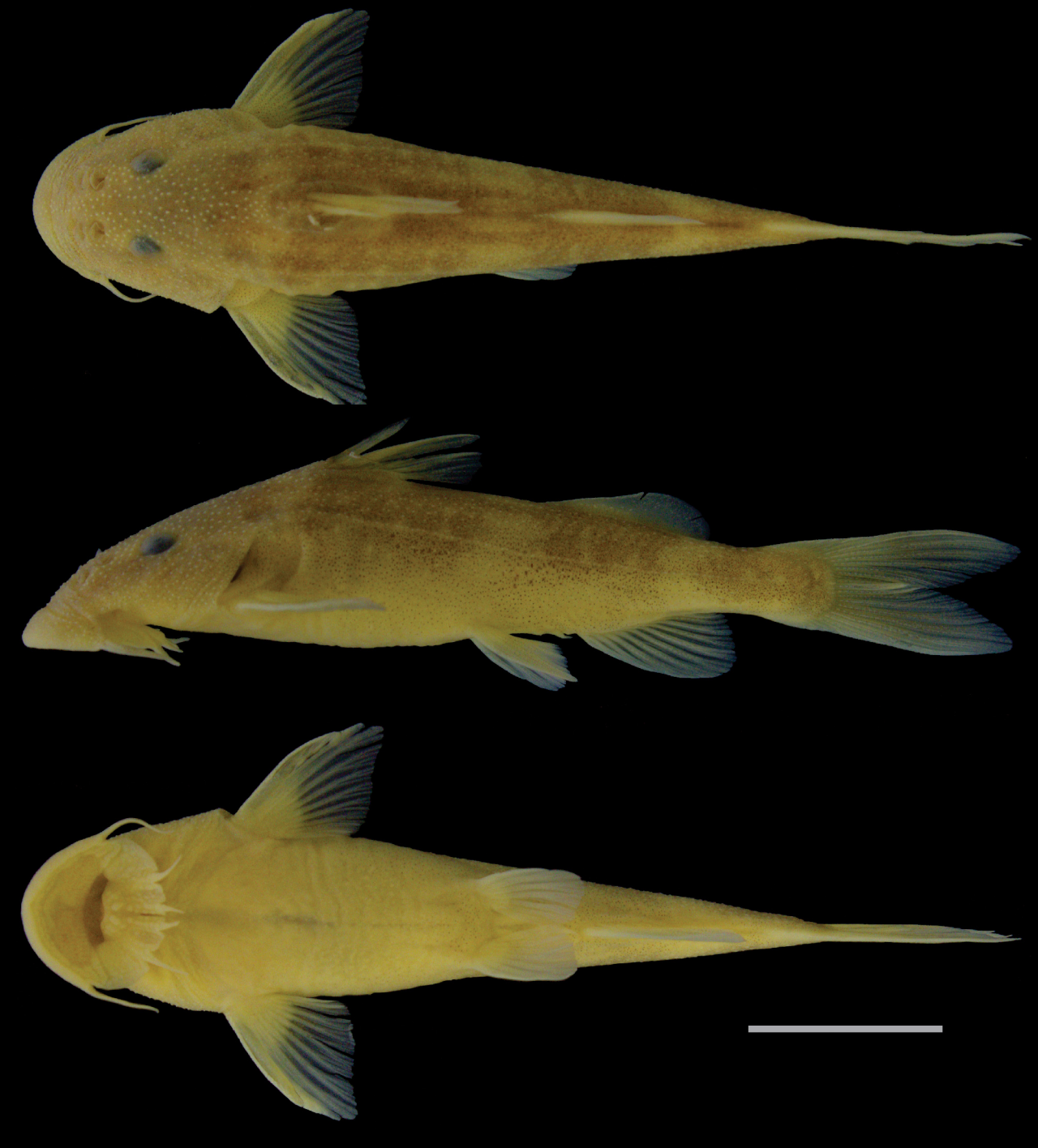
Fig. 1. Chiloglanis kerioensis, one of the species Hank Bart and colleagues discovered in Kenya. (Credit: R.C. Schmidt).

Henry “Hank” Bart, director of Tulane University’s Biodiversity Research Institute, had never done research in Africa, much less visited the continent, before 2008. Now after intense suckermouth catfish research in Kenya over the past few years, Bart is looking to continue his work there.