
 |
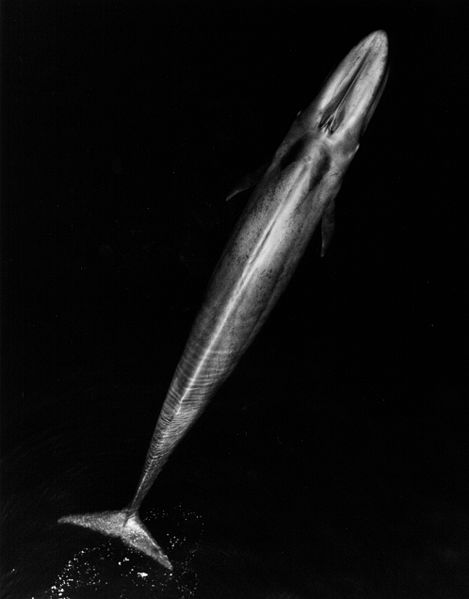
| Fig.1. Blue whale from above (Credit: NOAA Fisheries, 2007) |
What happens when a blue whale washes up on shore? This week in the news, scientists and students had the chance of a lifetime to study rare animals from around the world, from blue whales in Oregon to mysterious arachnids near the Dead Sea.
- Scorpion attacks and scorching temperatures were only some of the obstacles these scientists faced to collect and describe this group of arachnids: “The Naming of Parts,” Natural History Magazine (November 2015)
- This short piece highlights a curious new beetle found both in collections and in the wilds of Alabama and Florida: “The Adorable Alabama Whirligig Beetle That Eluded Entomologists,” Scientific American (13 November 2015)
- There is always a story behind skeletons mounted in museums, and the arrival of this blue whale on an Oregon beach is just the beginning: “What A Dead Blue Whale Can Teach Us About Life In The Ocean, And About Ourselves,” Smithsonian Magazine (18 November 2015)
- A recently discovered fossilized molar yields new information on long-lost relatives of modern humans: “DNA Sheds Light On Mysterious, Big-Toothed Human Relatives,” Washington Post (17 November 2015)


google 4096
ReplyDeletegoogle 4097
google 4098
google 4099
google 4100
This is fascinating! I was recently exploring google scholar project topics, and reading about these discoveries made me think about how rare animal studies, fossil analysis, and marine research provide so many opportunities for in-depth academic projects and interdisciplinary research.
ReplyDelete