Wednesday, December 16, 2015

The Dawn of Birds

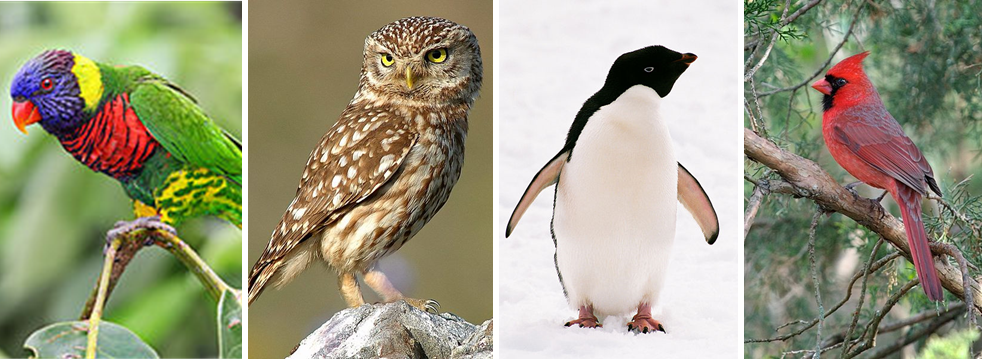
Fig.1. A green-naped lorikeet, a little owl, an Adélie penguin, and a northern cardinal show only a fraction of the remarkable diversity of birds (Credit: Benjamint, 2009Trebol-a, 2011Reinhard Jahn, 2007; & Stephen Wolfe, 2011)

Around 65 million years ago, one of the largest mass extinction events in Earth’s history occurred. An estimated 75 percent of all species went extinct, from non-avian dinosaurs to types of mollusks, plankton, insects, and plants. With extinction, however, came the chance for animals like birds to diversify and expand into empty ecological niches in a process called adaptive radiation. Although the Cretaceous-Paleogene extinction event (K-Pg) may have enabled the rapid evolution of new species of birds, research published last Friday in the journal Science Advances suggests that birds have a much longer and more complicated history than previously thought.

Friday, December 11, 2015

In the News: Moby-Dick and the Future Seas


As the climate talks in Paris come to a close - and as we wrap up GIF week with Deep Sea News - we learn more about ancient and recent marine collections that might save our warming seas. This week, we read about a miniature "Moby-Dick" from ancient times, the future of the Mediterranean, citizen science efforts, and more:

Wednesday, December 9, 2015

Bones of Coral Reefs

Fig.1. Coral depends upon algae for survival (Credit:via GIPHY)

In the middle of the Pacific Ocean, just off the small island of Kiritimati, corals are dying off at an astonishing rate. The small atoll, also called Christmas Island, suffers from high water temperatures caused by the current El Niño that have reached 4℃ above normal. Although these temperatures might be nice for a beachgoer, they do not bode well for the survival of the atoll’s extensive coral reefs.

Friday, December 4, 2015

In the News: Mammoths and Men

Fig.1. Mammoth skeleton at the George C. Page Museum
(Credit: Russ via Flickr, 2014)

Artifacts, sediment cores, and mammoth bones all connect us to ancient history, either through culture or the natural world. This week in the news, we read about how to examine the past using old collections in new ways:

Thursday, December 3, 2015

Of Ice and Insects

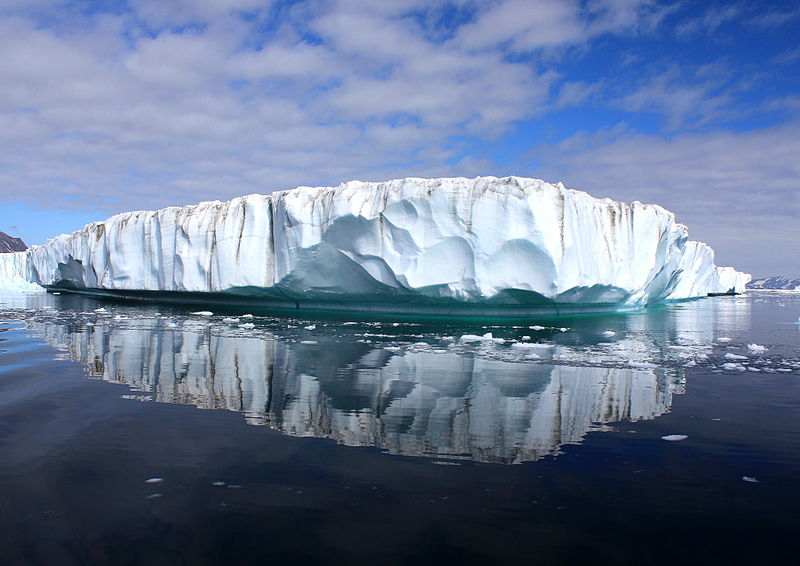
Fig.1. Greenland Ice Sheet (Credit: Christine Zenino, 2009)

Researchers at Stockholm University, Plymouth University, and the Natural History Museum, London (NHM) may have solved one of the most enduring puzzles from the last Ice Age. Around 12,880 years ago, the Northern Hemisphere experienced a sharp change in temperatures that culminated in a decrease of about 5℃ over 400 years. This event, called the Younger Dryas, is well documented in environmental records, but the cause had been largely unknown. In a study recently published in the journal Nature Communications, the researchers brought together three types of collections to address this mystery.